





The first Australian to speak publicly about being onboard the hantavirus-struck cruise ship has shared his experience after spending five weeks in a quarantine facility in Western Australia.
Four Australian citizens, one permanent resident and one New Zealander were repatriated to Australia on May 15, after an outbreak of the rodent-borne illness on the MV Hondius.
Ever since, the group has been completing a six-week quarantine period at the Bullsbrook Centre for National Resilience, about 40 kilometres north-east of Perth.
Quarantine worth it for safety
Three people died in the cruise ship outbreak.
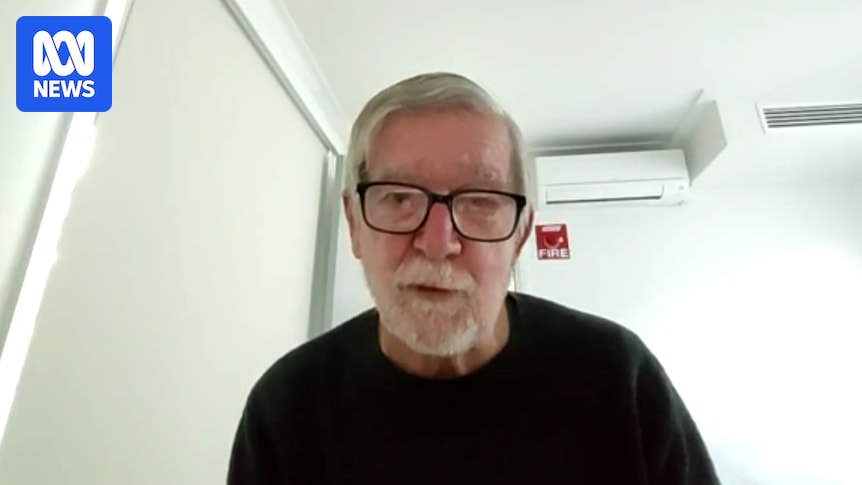
Australian passenger Peter Marsh, who spoke exclusively to the ABC from inside the Western Australian quarantine centre, said he had no bad feelings about how things had played out.
“My feelings are that nobody’s responsible for, or to blame for what’s happened,”
the 82-year-old said.
“The first person who died, obviously, was the person who brought the virus onto the ship, but he had no knowledge that was going to happen, and he had no symptoms when he got on the ship and he paid the ultimate price.
“And the [cruise company], once they became aware of what was going on, they worked assiduously to minimise the risk for the rest of us.
The MV Hondius in South Georgia. (Supplied: Peter Marsh)
“We’ve also, I think, been very lucky that the Australian government has stepped up to bring us back to Australia under quarantine.
“While it’s been somewhat tiresome being locked up for this six-week period, I think that if one person is saved from getting sick, let alone dying, as a result of our quarantining, then it’s all well worthwhile.”
‘Huge shock’ on birding trip
An avid birder, Mr Marsh joined the cruise with a birding group from Sydney.
Initially, it was all he had hoped it to be, but then passengers started getting sick.
“It was a very gradual process, and the gentleman who died first, it seemed like a once-only event,” he said.
“When we heard that the first deceased’s wife had died, there was a huge shock, and everybody began to think, well, maybe this is something that’s catching.”
Once the illness was identified as hantavirus, stress levels onboard the MV Hondius began to rise.
Peter Marsh and five other passengers from the ship arrived back in Australia a month ago. (ABC News: Andrew O’Connor)
“It became clear that this was potentially a virus that could spread to all of us, and we were all acutely aware that it was able to kill people,”
Mr Marsh said.
“Unfortunately, there were a few so-called influencers on board who at that time went into overdrive and published some absolutely appalling material … [it] showed, I think, gross irresponsibility on their part because it led families and friends all around the world … to believe that things were far worse than they were.”
From that point on, Mr Marsh said passengers kept their distance and spent most of their time in their cabins until they disembarked in Tenerife.
From the Spanish island, they were flown to the Netherlands, then repatriated to Australia to begin their six weeks of quarantine at the COVID-era quarantine facility.
“My initial reaction was that it was incredibly sterile, but now we’ve been here for nearly 40 days, it’s surprisingly comfortable, and it’s been made infinitely better by the wonderful treatment that we’ve had from the staff here,” he said.
“The staff who look after us come from the [National] Critical Care and Trauma Response Centre … they’ve just been incredibly supportive.”
Passing the days
Aside from daily symptom checks, the routine at Bullsbrook has included individual walks around the grounds.
“We actually have two one-hour slots each day, and those slots progress through the week,” Mr Marsh said.
“The first slot’s a bit cold at 6am to 7am. It’s much warmer and sunnier at midday to 1pm.
“It really has made a huge difference to everybody’s wellbeing.“
His birding experiences, more than two decades’ worth, have helped pass the hours.
Peter Marsh was drawn to the Atlantic cruise odyssey to see birds like the Ascension frigatebird. (Supplied: Peter Marsh)
“Three of us at the centre are keen bird watchers, and so we’ve been sort of semi-competing to see who can get the most birds … I’m on 34 birds that I’ve seen from the centre.”
As well as keeping boredom at bay, it has staved off the stress.
“Having birding as an abiding passion is really an important aspect of settling the mind and bringing calm and peace to a person’s psyche. It’s something that we did on the boat, obviously, but we can still do here at the centre, and it really is a wonderful relaxant and mind cleanser,” Mr Marsh said.
Heading home
The group’s quarantine period is due to end next Tuesday, and the passengers are expected to fly to their homes in New South Wales and Queensland.
After so long away, Mr Marsh cannot wait to see his family and what comes with it.
“A big hug from my wife and the children and the grandchildren,”
he said.
“Getting a haircut, well, it’s something that needs to be done.”