



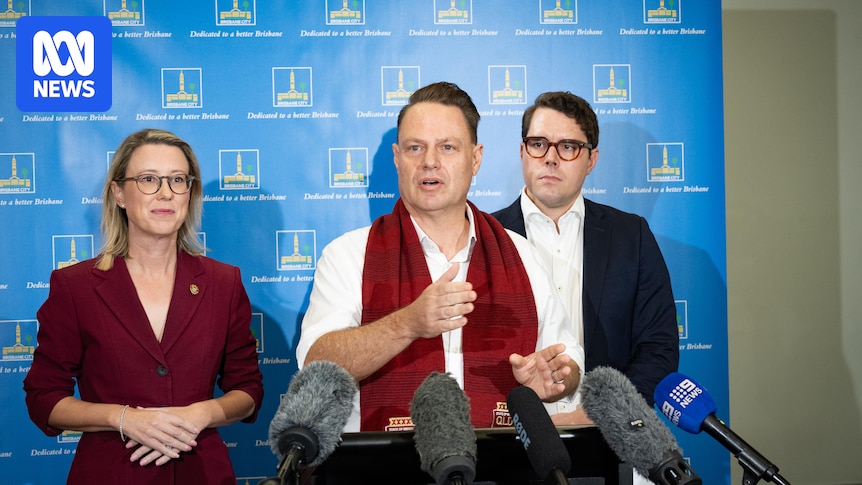
Brisbane home owners will face a general 3.97 per cent rate hike, with Brisbane City Council attributing it to rising fuel costs and war in the Middle East.
The council handed down its rate hike today in its “sensible” 2026 budget, which was characterised by further cuts and austerity measures.
The $3.9 billion budget is about $200 million smaller than last year’s budget, which in turn was $200 million smaller than the one handed down in 2023.
Lord Mayor Adrian Schrinner said Brisbane’s budget was “hit hard” by the cost of natural disasters such as Cyclone Alfred and a lack of funding from the state and federal governments.
“We’re not in ordinary times, and those ordinary times haven’t existed since the pandemic,”
Cr Schrinner said.
“Despite these challenges, the budget I’m presenting today is balanced, it’s responsible, and keeps costs down for residents.”
The 3.97 per cent rate hike is below Brisbane’s inflation rate, which is about 4.6 per cent, according to the Australian Bureau of Statistics.
Council fees and charges will increase by an average of 4.8 per cent.
Council is paying off its debts for the first time in nearly a decade, promising to repay $557 million in debt over the next 12 months.
Unlike previous years, there were no major sweeteners or infrastructure projects included in this year’s budget.
Minor items include $5.6 million for free outdoor wellness and mindfulness classes, $110 million for road resurfacing, and $135 million for Story Bridge repairs.
Story Bridge bill soars
Today, the council released an update on its Story Bridge business case, which calculates the bridge needs $1.35 billion in repairs ahead of the 2032 Olympics.
It says the full cost of a renewal would be $3.6 billion over 20 years.
Previous independent reports commissioned by the council estimated the cost would be $350 million, based on similar bridges in other countries.
The council says it will formally seek an 80/10/10 funding split: 80 per cent from the federal government, 10 per cent from the state, and 10 per cent from the council.
When asked what would happen to the bridge if the state and federal government did not contribute 90 per cent of the funding, Cr Schrinner insisted that they would.
Cr Schrinner ruled out putting a toll on the bridge to pay for the repairs.