







On a typically foggy winter’s morning in Tasmania’s northern midlands, a trio of coopers fend off the cold, toasting oak barrels with quick bursts of fire.
Charring the wood helps caramelise the sugars and draw out the original flavours of the timber, from bourbon to fortified wine.
Master cooper Dave Schmeider rolls the warm barrels back into the workshop, carrying a heady aroma.
“These casks have already been filled for several years with muscat, just lovely flavour and makes all the difference to the cask for the whisky,”
he said.
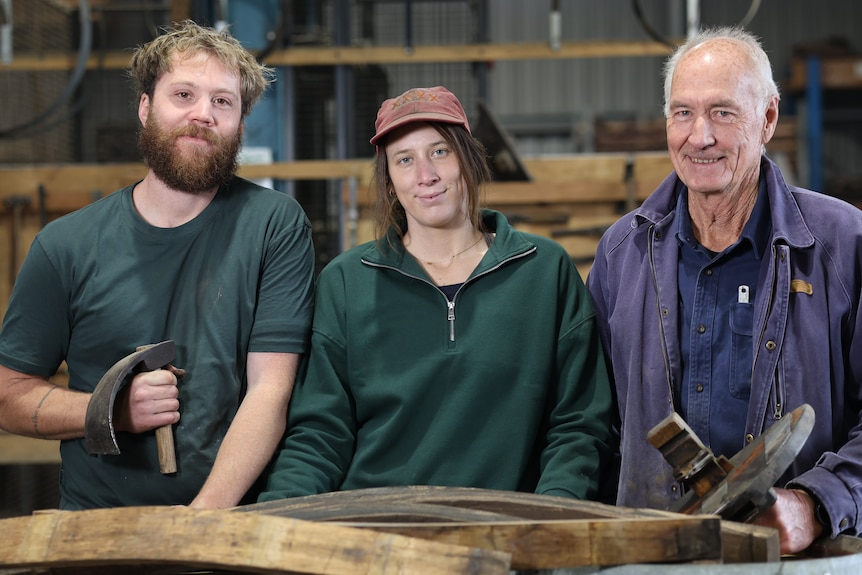
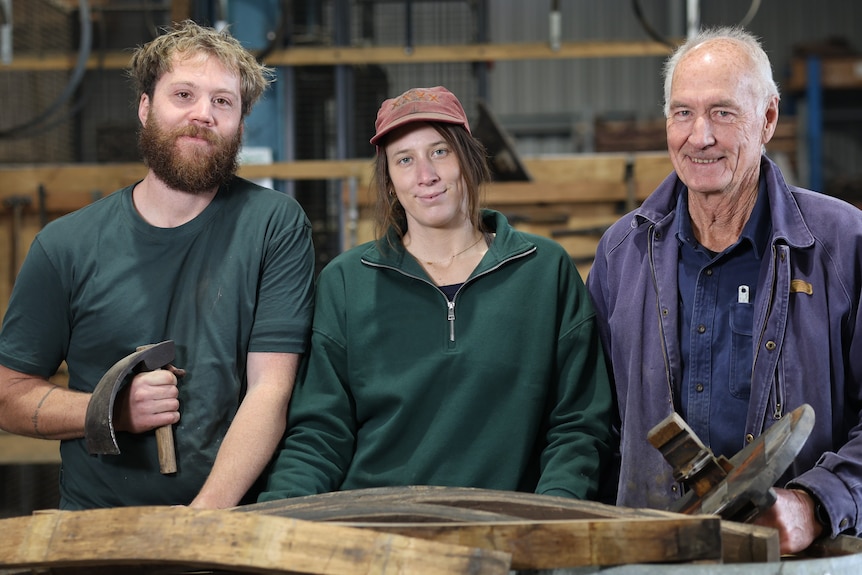
Brandon Meyer, Mell Meyer and Dave Schmeider. (ABC News: Laurissa Smith)
Transwood Cooperage, just south of Launceston, is one of only a handful of family-owned operations in the state.
The Schmeiders moved to the site at Adam’s Distillery in 2019 from Queensland, where they specialised in building much larger vessels for rum.
Today, the small team led by Dave Schmieder handles up to 800 barrels a year for the local whisky industry.
He’s spent nearly 56 years in the trade and trained several apprentices, including son Laurie, daughter Mell and son-in-law Brandon Meyer.
“The way we treat the cask is very, very important; it makes or breaks the whisky,”
Mr Schmeider said.
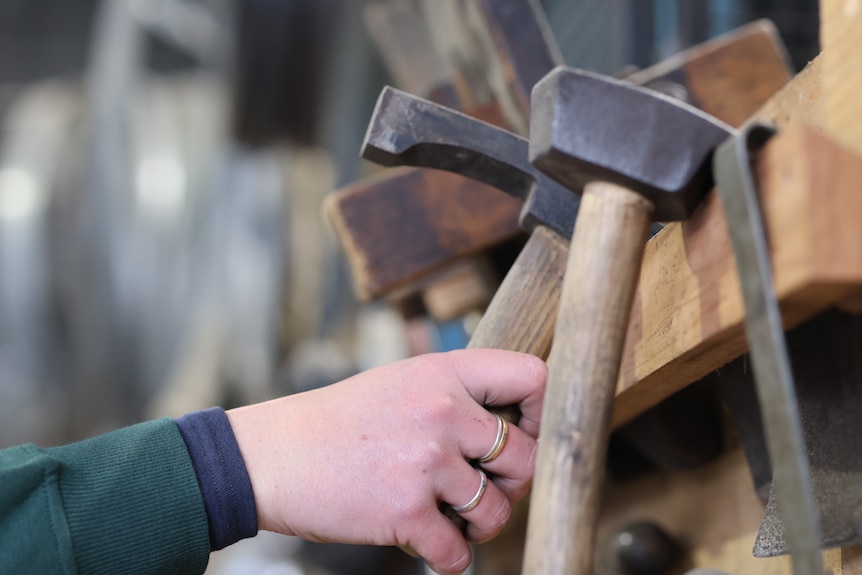
Mell Meyer said traditional hand tools give her more control to fix flaws in the timber. (ABC Rural: Laurissa Smith)
Much of the work in this cooperage is done by hand, cutting the curved barrel staves, shaping them inside working hoops and charring the timber to the clients’ specifications.
Having a good sense of smell is also key.
“With our cask making, we concentrate a lot on the toasting side of it, where you’re heating it up and toasting the timber,” Mr Schmeider adds.
“So you need a good nose to read those notes and Mell is brilliant at that.
“I’m too old, my nose is stuffed.“
Mell Meyer is the only qualified female cooper in Tasmania — and you won’t find too many interstate either.
“Initially, I wasn’t interested in the business at all,” she said.
“But it’s been a cool opportunity to learn and work with Dad and Laurie.“
Cooperage valued by local distilleries
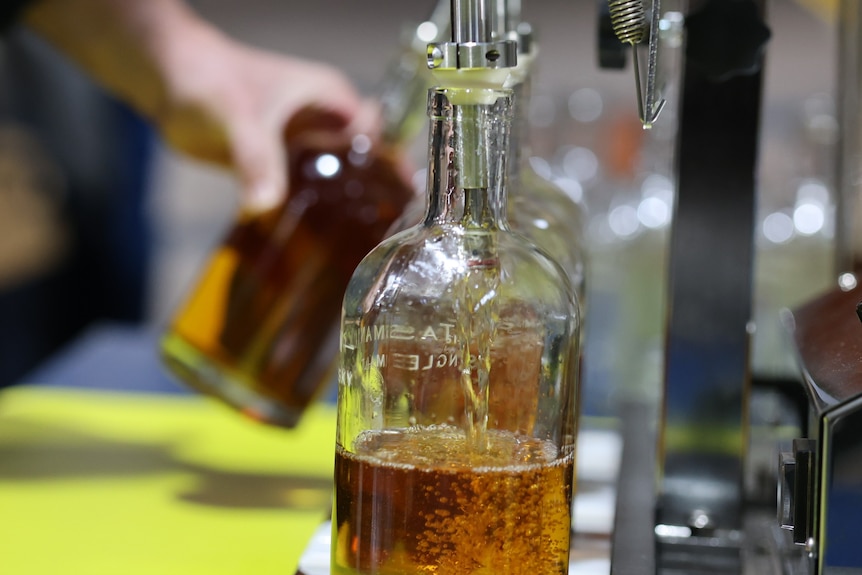
Launceston Distillery at Western Junction has been busy filling bottles with single malt whisky. (ABC Rural: Laurissa Smith)
Ten minutes’ drive away, next door to the Launceston airport in Hangar 17, distiller Chris Condon is filling bottles with single malt whisky, matured in some of the Schmeiders’ casks.
“They’ve added real value to the industry. If you don’t have a cooper at your distillery, they’re the main point of contact,” he said.
“Dave is a genuine master craftsmen, so you know the quality of the barrel is going to be good.“
Launceston Distillery isn’t producing whisky at the moment, but it has plenty of mature stock on hand.
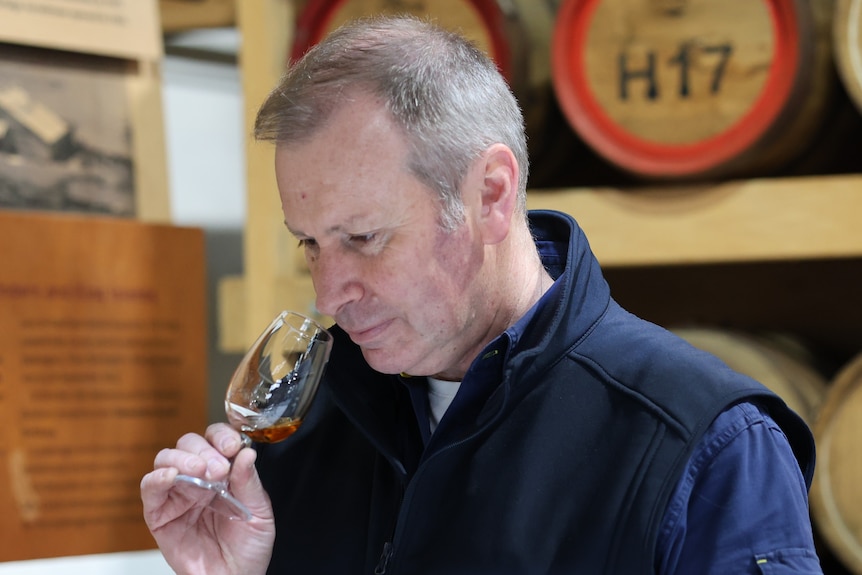
Distiller Chris Condon checks the product. (ABC Rural: Laurissa Smith)
Chris Condon said the main focus this year was marketing the product, and he admitted that had been challenging for the wider sector.
“The market is a little bit depressed with the cost of living, and we are a discretionary spend,” he said.
Taking Tasmanian whisky to new heights
There are more than 80 distilleries across the state, and three-quarters of them focus on whisky.
Some well-established distilleries have paused or scaled back production in the last year, in line with global trends.
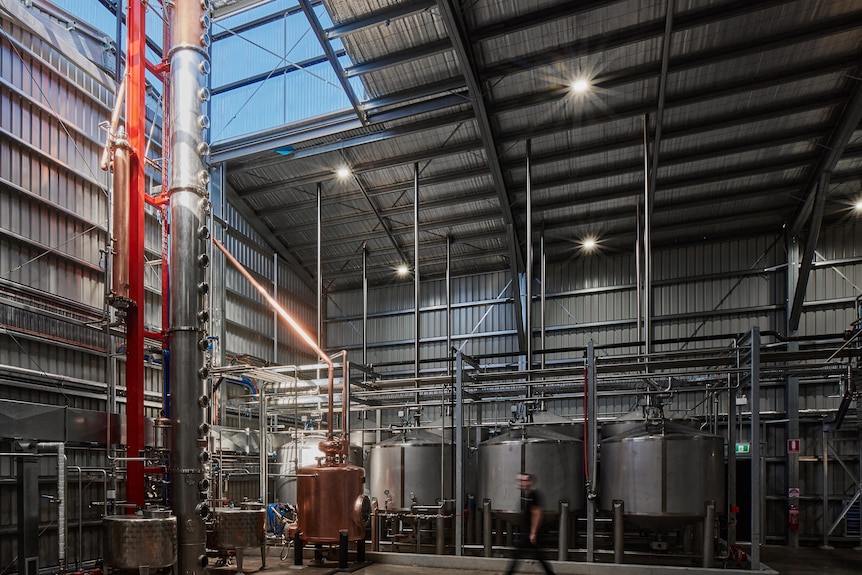
The state-of-the-art custom-made whisky still is a feature of the massive Greenbanks Distillery at Bridgewater. (Supplied)
Despite this, new entrants on the Tasmanian whisky scene, backed by private investors, continue to pour millions of dollars into massive facilities, not phased by a decline in alcohol sales.
One of those is Greenbanks Tasmanian Whisky Co at Bridgewater, on the outskirts of Hobart.
It has the potential to produce 3 million litres of alcohol per year.
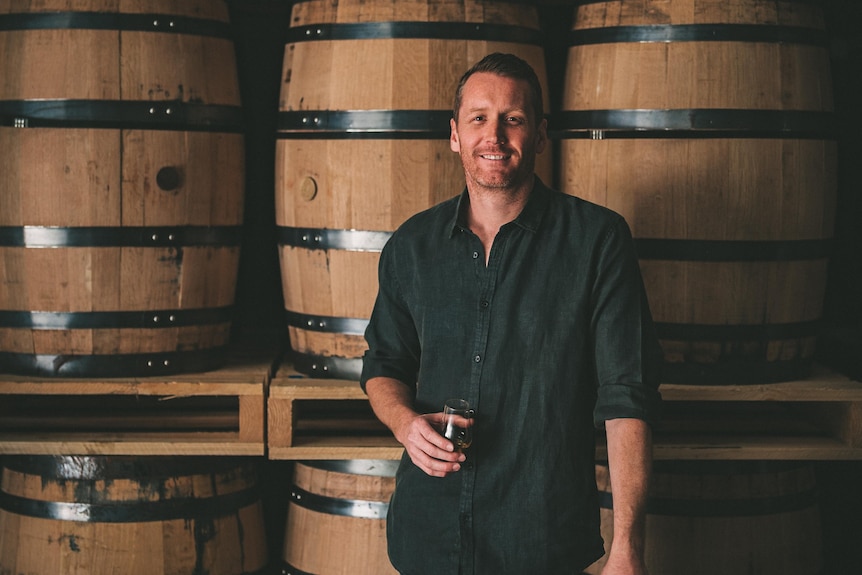
Hugh Roxburgh at Greenbanks Tasmanian Whisky Co, one of the newest large-scale distilleries in the state. (Supplied)
Co-owner Hugh Roxburgh has ambitions to become one of the state’s largest distillers, sourcing barley, wheat, rye and corn from farmers across Tasmania.
“We know if we’re going to compete against the big guys in world whisky, we have to supply a lot more volume and create more accessibly priced whiskies,” he said.
“We think there’s enormous potential for Tasmanian whisky over the next 10 to 20 years.“
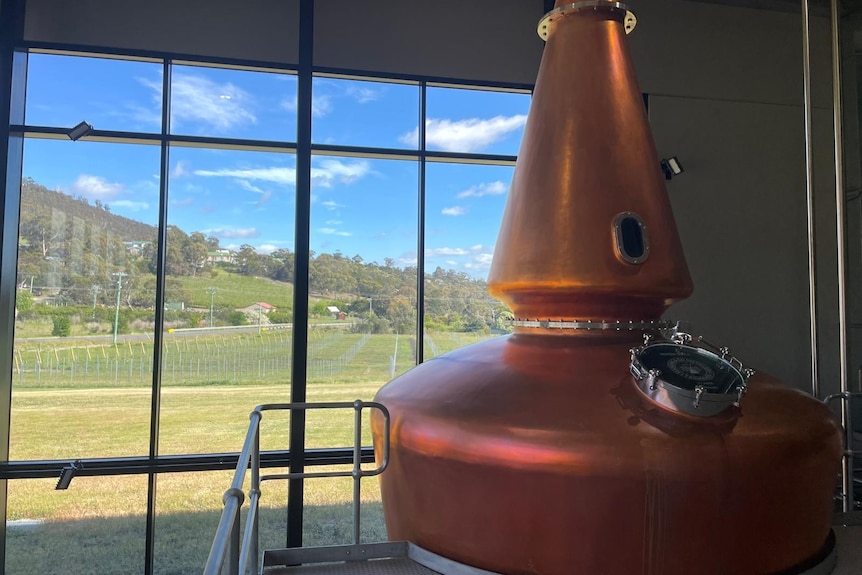
Maguire and Co at Richmond plan to target the export market with its single malt whisky. (Supplied: Maguire and Co.)
In the Coal Valley at Richmond, industry pioneer Pat Maguire knows success in this industry takes patience.
He is the production manager behind newly commissioned distillery Maguire and Co at Richmond, where barrels crafted at Transwood Cooperage are being filled with single malt whisky.
“We set this up knowing there’s a big export market out there,”
Mr Maguire said.
“We think we can produce something like 350,000 litres of spirit a year, but we have the potential with the same equipment to produce over a million litres a year.”
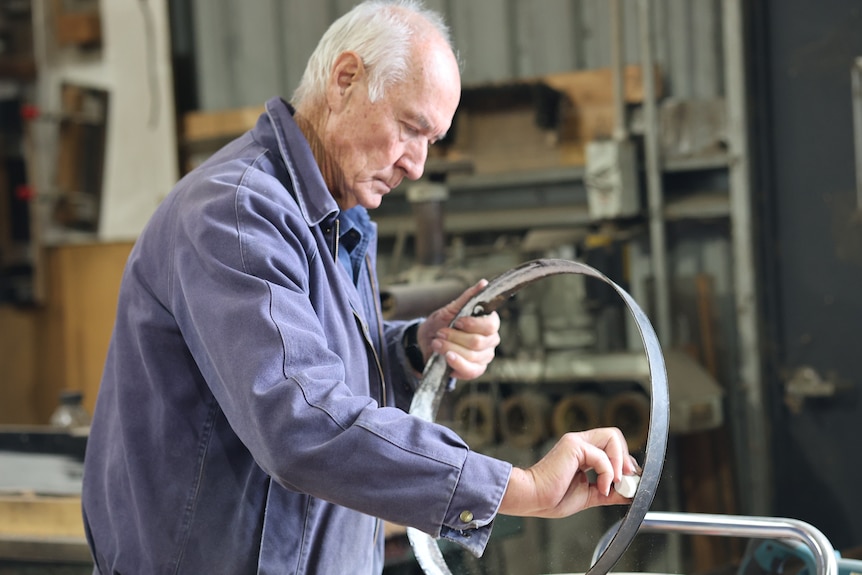
Dave Schmeider works on a new whisky barrel inside his workshop. (ABC Rural: Laurissa Smith)
It is keeping the crew at Transwood busy, but Dave is happy to slow down.
“My body is starting to tell me that I’ve got to start backing off a bit,”
he said.
“It’s great that I’ve got my son and my daughter and my son-in-law involved in the industry now.
“They’ll carry it on for the future, which is great, I love it.”