







At least four in five Albertans agree that the privacy law applying to businesses should also apply to political parties, suggests a new Ipsos poll, conducted for a B.C. privacy advocacy organization.
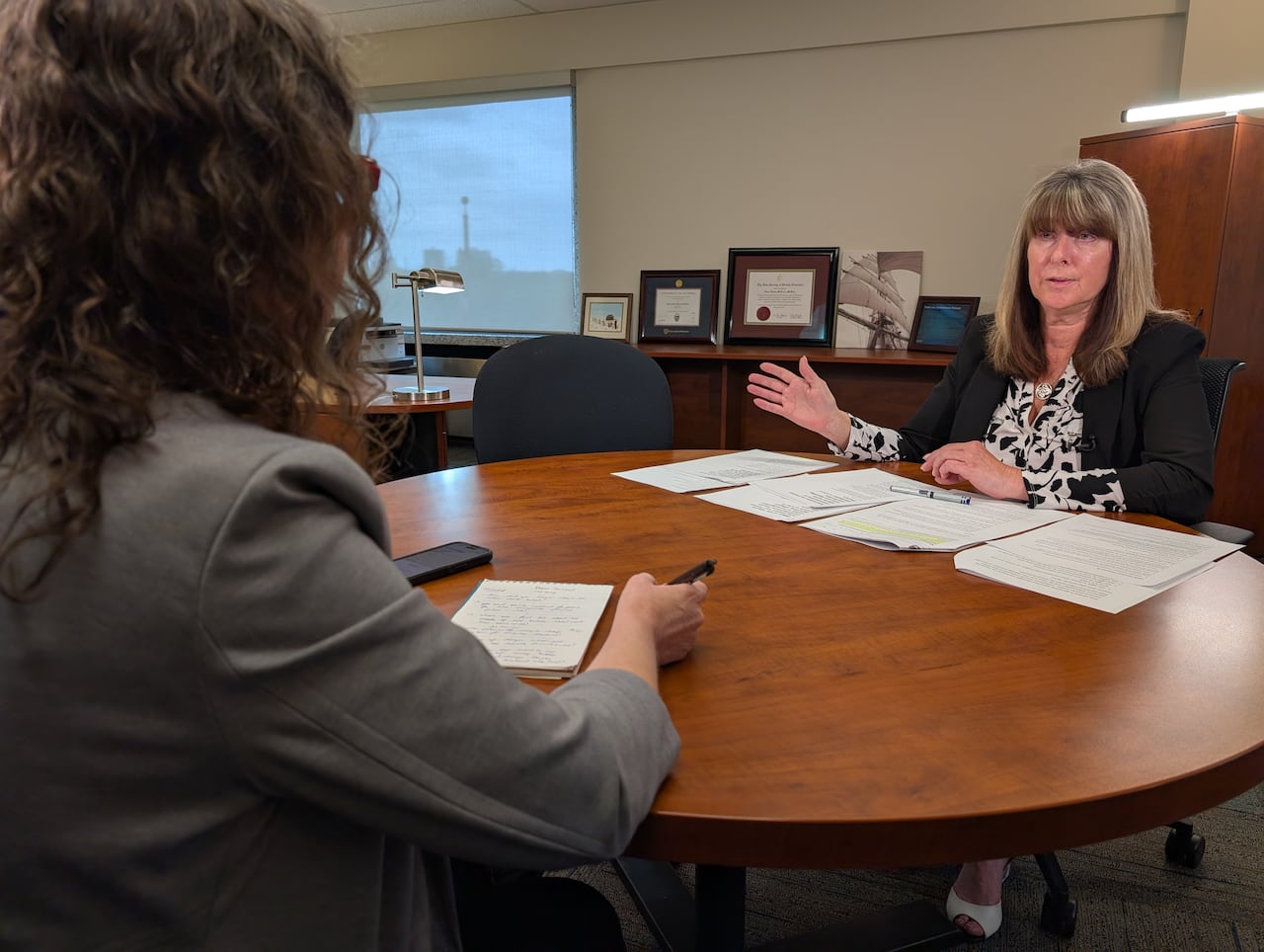
Alberta Information and Privacy Commissioner Diane McLeod says the poll results bolster her call for her office to have oversight of political parties, following a massive voter data breach that came to light in April.
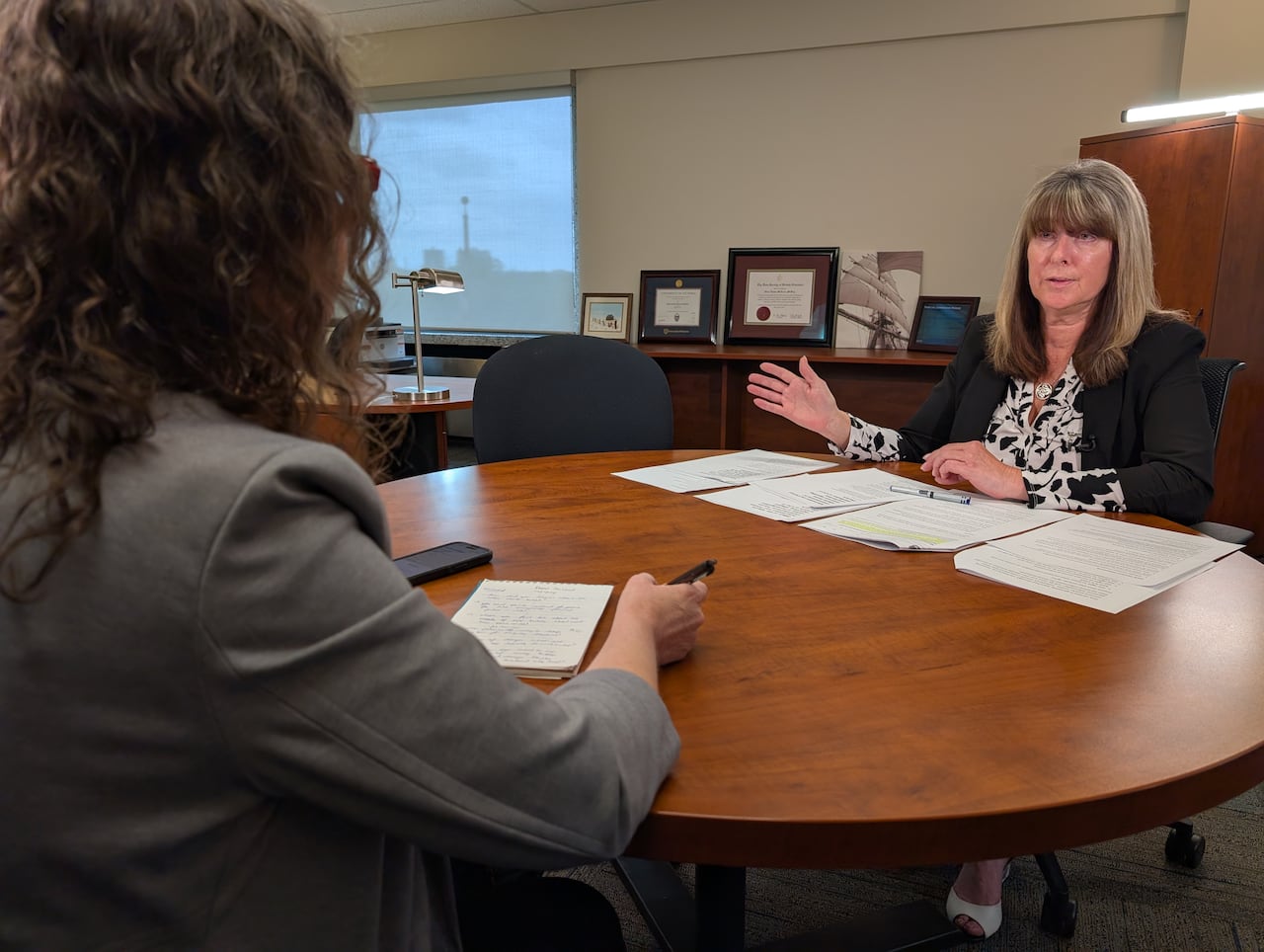
“I think there’s a loss of trust,” she said in an interview with CBC News on Thursday.
Elections Alberta has said the pro-independence Republican Party of Alberta’s legally acquired list of nearly three million Alberta electors — and their personal information — somehow ended up in the hands of a separatist group called the Centurion Project and was posted in an online database.
McLeod has called what happened “the worst breach in Canadian history involving voter data.”
The Centurion Project has previously said it relied on a “third party” to provide it with datasets for its searchable database. The organization has said it created its database as part of an attempt to recruit volunteers and identify supporters in anticipation of a referendum on independence.
McLeod said she received hundreds of messages from people across the province, worried that people in their family could be at risk because their personal information was publicly posted.
Elections Alberta, the RCMP and McLeod’s office are all investigating the breach. Electors lists contain citizens’ full names, street addresses, postal codes, phone numbers and unique election identification numbers.
McLeod is investigating the Centurion Project, but can’t look at the Republican Party of Alberta by law, which she said is “troubling” to her and confusing to the public.
“I felt helpless, quite frankly,” she said. “As a person who’s advocated for privacy rights for nearly 30 years, it’s difficult to sit in a situation where someone is looking to you to do something and there’s nothing you can do.”
In a statement issued last month, Republican Party of Alberta Leader Cameron Davies said the party is assisting in Elections Alberta’s investigation into what happened.
The results of the Ipsos poll, conducted online between May 22 and May 26, suggest 84 per cent of Albertans want McLeod’s powers expanded to include oversight of political parties.
Ipsos polled citizens about three weeks after Elections Alberta’s investigation into the breach became public.
The polling company surveyed 801 adults, and the results suggest about two-thirds of Albertans think political parties should have a legal duty to protect voter information against unauthorized access, sharing, copying or misuse.
Almost two-thirds of respondents also agreed parties should have a legal duty to inform regulators and the people affected if there’s a data breach or misuse, and that there should be consequences for being careless with voter data.
McLeod said she and her predecessors have called for decades for Alberta’s Personal Information Protection Act (PIPA) to apply to political parties.
She said the provincial government is reviewing PIPA now, which she believes is an opportune time to make the change.
She also said she believes Alberta’s United Conservative government should consider developing electoral sector-specific privacy law that is consistent between the federal and provincial governments, so that candidates for both levels of government are subject to the same rules.
Right now, only the province’s Elections Act, enforced by the chief electoral officer, governs provincial parties’ use of the information in voters’ lists.
Quebec and British Columbia both have privacy laws that apply to political parties.
Privacy director says political parties’ stances outdated
Jason Woywada, executive director of the BC Freedom of Information and Privacy Association (FIPA) which commissioned the poll, said the Alberta survey was a natural extension of the organization’s advocacy for federal political parties to become subject to privacy law.
The Alberta voter data breach is a “worst-case scenario” the association has been warning about for years, he said.
Most political parties are reluctant to acknowledge the rising risks of voter data misuse in an era of foreign interference and attempts at election manipulation, Woywada said.
“There’s a weaponization that can happen with these lists now if it isn’t protected properly,” he said. “We just haven’t seen political parties willing to really admit that that risk is real.”
McLeod, who was not involved in commissioning the poll, said she hopes the Alberta government heeds the findings.
She said she encourages citizens to write to their MLAs, who have the power to change the law.
Voter says province must do more in wake of breach
An Edmontonian named Chad Albert said he has already written to Premier Danielle Smith about his shock and disappointment following the data breach, and to voice his concern regarding the government’s response, which he described as underwhelming.
In an interview with CBC News on Thursday, Albert said he believes the provincial government seemed more concerned about damage control than helping members of the public protect themselves from identity theft or fraud after the news of what happened broke.
“We don’t know where our data is at this point in time, or who shared it with who,” he said. “That becomes very scary, especially with national sovereignty at risk.”
In a statement issued Wednesday, Heather Jenkins, press secretary to Justice Minister Mickey Amery, said that “the protection of Albertans’ personal information is taken very seriously by our government, and those responsible should be held accountable under law.”
Albert said he wants the provincial government to call a public inquiry into the data breach, to have privacy law apply to political parties, and to reverse recent changes to elections law that raised the threshold for Elections Alberta to begin an investigation.
McLeod’s investigation is limited to the actions of the Centurion Project, a pro-separatism third-party advertiser.
On Oct. 19, Albertans will vote on 10 referendum questions, including a multiple choice question about staying in Canada or starting the legal process to prompt a binding referendum on separation.
In late April, Elections Alberta successfully sought a court order for the Centurion Project to remove its online database where users could search for voters and sometimes see information such as their street address and polling station.
Major parties say voter data protection strong
Elections Alberta spokesperson Maia Hanrahan said in an email on Thursday that the agency couldn’t provide an update on the ongoing investigation. Her email said the chief electoral officer will be making recommendations for legislative changes in the fall.
United Conservative Party spokesperson Dave Prisco said in an email Thursday the party has “ironclad security measures” for its version of the list of electors.
“We have always maintained the highest standard of protection for this information, and that has not changed,” he said.
Heather Wilson, executive director of the Alberta NDP, said in a statement on Thursday that the party is committed to protecting personal information. She said the NDP would welcome any new measures that better protect voters’ personal information and improve public confidence.
Alberta’s premier and justice minister have both said they want to see the outcomes from all investigations before considering any changes to Alberta laws.
Jenkins, press secretary to the justice minister, reiterated that message in her statement on Wednesday.
“The privacy commissioner, along with Elections Alberta and the RCMP are looking into this matter thoroughly and we will wait for the results of those investigations before commenting further,” her statement said.
McLeod said she believes there is no need for the government to wait. She said the government already knows voter data isn’t protected by privacy law, and the investigations won’t change that.