






A “heroic” Northern Territory police officer who risked his own life trying to save a three-year-old boy from a house fire in Alice Springs three years ago will be awarded a Valour Medal for his bravery.
In handing down her findings into the death of Mitchell Thomas today, NT Coroner Elisabeth Armitage singled out Constable First Class Liam Verity’s actions in repeatedly entering the burning building in an effort to save the toddler.
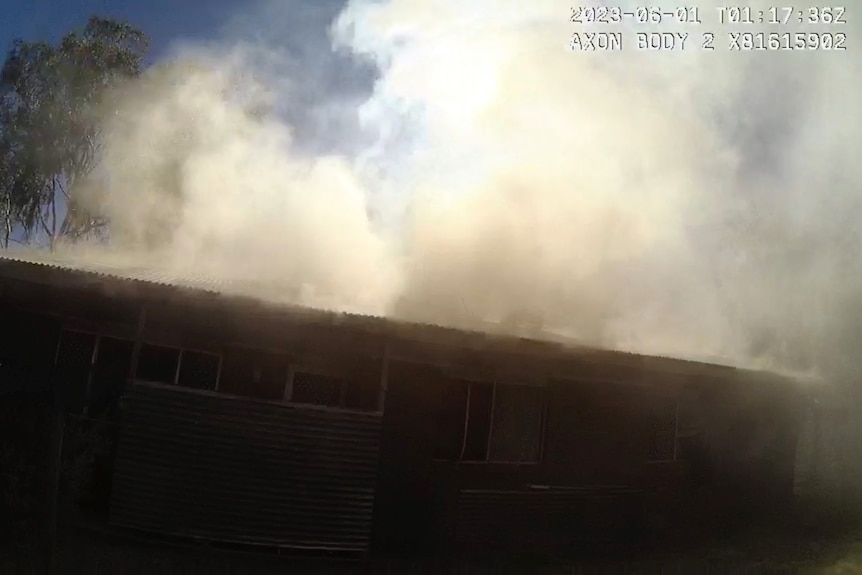
Judge Armitage found Mitchell was at home in Larapinta on June 1, 2023 when the fire broke out, sparked by an electrical fault in the building’s roof, before passer-by Stephen Greenfield noticed smoke billowing from the eaves.

Despite the ‘heroic’ efforts of police and emergency services, Mitchell Thomas was found unresponsive in a bedroom and could not be revived. (Supplied: NT Courts)
Mr Greenfield and a neighbour rushed to the house, where they saw the only other occupant, Mitchell’s 16-year-old uncle, trapped inside, “pushed up against one of the windows”.
“There was security mesh over the window and, in a feat of no doubt adrenaline-fuelled strength, Mr Greenfield managed to pull the entire frame out from its fixings in the wall,” Judge Armitage wrote.
The pair’s actions allowed the teenager to jump to safety, without which, Judge Armitage said, he “would most likely not have survived the fire”.
Judge Armitage said Mitchell’s uncle raised the alarm that the three-year-old was still trapped inside, but Mr Greenfield was unable to gain entry before police arrived.
Stephen Greenfield pulled over when he saw smoke billowing from the house and helped save Mitchell’s teenage uncle by ripping off a security screen. (Supplied: NT Courts)
Constable Verity’s body-worn camera footage then captured the officer smashing a glass door with his police-issue baton and entering the house “with disregard for his own personal safety”.
“He said it was like opening an oven door,” she wrote.
“The heat was so intense he said it felt like his face, hands and neck were burning.“
Forced back by the intense heat, Constable Verity tried another door, crawling on his hands and knees before he was again forced to retreat through a window.
Undeterred, Judge Armitage said Constable Verity re-entered the property for a third and fourth time armed with a fire extinguisher and garden hose, but was unable to extinguish the flames.
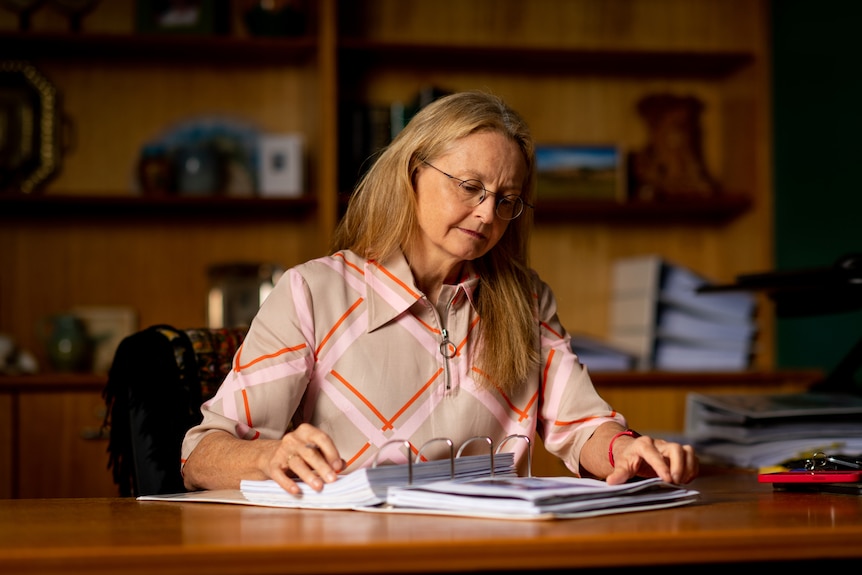
Elisabeth Armitage recommended Constable First Class Liam Verity for a bravery medal for his efforts to save Mitchell. (ABC News: Che Chorley)
“[Constable] Verity and other attending police officers later required medical attention at the hospital and, although their efforts were not successful in rescuing Mitchell, they clearly could not have done more in their efforts to save him and in doing so put their own safety at risk,” she wrote.
“[Constable] Verity’s efforts were heroic, though he would be too modest to say so — he would say he was just doing his job — well, he did so bravely.
“I commended his actions to the Commissioner of Police who has determined to award him the NT [Police Force] Valour Medal.“
Firefighters wearing protective equipment and breathing apparatus arrived six minutes after the police, finding Mitchell in a bedroom, but he was “non-responsive” and could not be saved.
Audit reveals ‘major faults’
Judge Armitage said she initially held suspicions work conducted by Alice Springs electrician Carey Joy in the months before the fire may have contributed to the blaze.
She said an invoice Mr Joy issued for the work indicated his company had installed new electrical cabling in the home’s roof, which was at first thought to have been linked to the fire.
But during the inquest it emerged the invoice contained an error and no new cabling had in fact been laid, with subsequent inquiries clearing him of any wrongdoing.
Further confusion emerged when the initial police investigation suggested non-compliant wiring in the house’s roof was the likely cause of the fire, prompting fears similar issues could be “widespread across social housing”.

Judge Armitage thanked Carey Joy for the assistance he provided to the inquest “in difficult circumstances”. (ABC News: Matthew Qvortrup )
As a result, Judge Armitage requested an audit of public housing throughout the NT, before ultimately dismissing the wiring theory after hearing expert evidence.
But in her findings she said the audit still proved to be “a very worthwhile exercise”, uncovering “a significant number of major faults” in older properties, including earthing and cabling faults and missing or faulty smoke alarms.
Judge Armitage ultimately concluded the Larapinta fire was caused by electrical arcing igniting degraded roof insulation, but she could not rule out that a smoke alarm in the lounge room had not been functioning at the time.
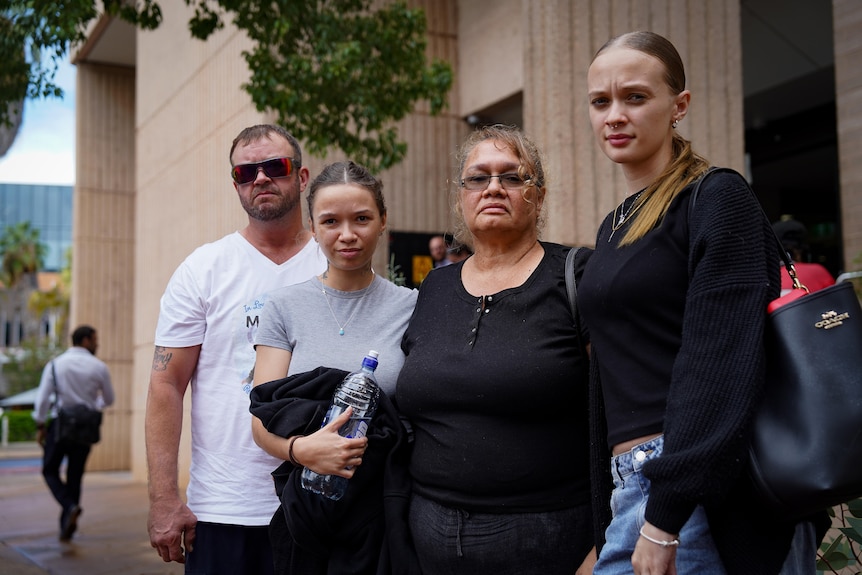
Mitchell’s family told the inquest he was a healthy, lovely three-year-old “who ran amok on us” and that “everyone who knew him loved him”. (ABC News: Xavier Martin)
“In those circumstances, family members are left with the terrible uncertainty as to whether events might have turned out differently if the lounge room alarm was operational,” she wrote.
“No doubt, this weighs very heavily on government which, as owner, is responsible for providing safe and habitable premises and is responsible for maintenance and repairs.”
In response to the audit, Judge Armitage said NT Housing Department acting deputy chief executive Andrew Walder had testified that all of the faults identified had been rectified.
The inquest heard a further audit was now also planned, prompted by the coronial process, but Judge Armitage pointed out that a 2006 recommendation to establish a register of electrical issues had been “long forgotten about”.
“It is deeply disturbing that lessons learned from that tragedy have been forgotten and it is hard not to feel cynical about commitments to recommendations moving forward,” she wrote.
“However, I am determined to remain hopeful and I accept the assurances provided by Mr Walder in good faith.“