









A former medical practitioner’s “grossly irresponsible” prescribing played a direct role in the deaths of two drug-dependent people in Tasmania, a coroner has found.
A report by coroner Olivia McTaggart into the deaths of four people found Dr David Jackson had prescribed methadone as part of opioid replacement therapy (ORT), and benzodiazepines, to each of the deceased at their time of death.
Ms McTaggart also found Dr Jackson displayed a “permissive approach to opioid prescribing” before the deaths, which had raised concerns from medical professionals since the early 1990s.
A lengthy criminal investigation was conducted into the four deaths, and no charges were laid against Dr Jackson.
Nicholas Brown, 35, Toni Wiki, 38, Matthew Winwood, 47, and Belinda Kemp, 37, died within an 11-month period between September 2016 and August 2017.
Ms McTaggart determined the causes of death for each person varied: Ms Kemp died from pneumonia, with mixed drug toxicity, emphysema, obesity and heart muscle disease also contributing, and Ms Wiki’s cause of death was cardiac arrest caused by injecting Xanax.
Mr Brown died of combined methadone and benzodiazepine intoxication, while Mr Winwood died from mixed prescription drug toxicity, including methadone.
“The actions of Dr Jackson, by his grossly irresponsible prescribing, played a direct causative role in the deaths of Mr Brown and Mr Winwood,”
Ms McTaggart said.
“He did not play a direct role in the deaths of Ms Wiki or Ms Kemp.
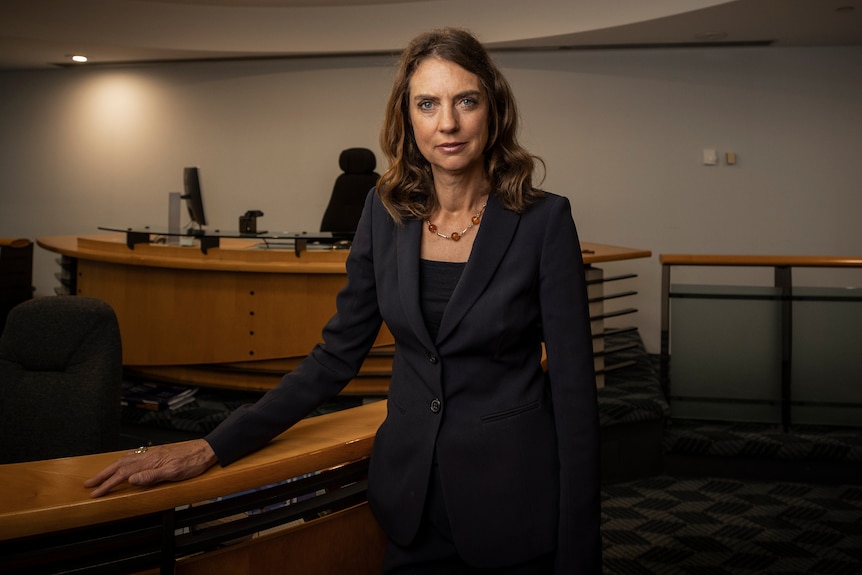
Olivia McTaggart found David Jackson displayed a “permissive approach to opioid prescribing” before the deaths. (ABC News: Luke Bowden)
The coroner said an “intensive, lengthy and large-scale criminal investigation” into the deaths found Dr Jackson’s supply of prescribed takeaway doses of methadone was contrary to the governing guidelines, and that his excess supply of methadone to each deceased might have contributed to their death.
Ms McTaggart said investigators had formed the view that Dr Jackson’s actions were “grossly negligent” and charges of manslaughter should be considered by the Director of Public Prosecutions (DPP).
The investigation was broadened to include 13 other patients who, it was alleged, were prescribed drugs by Dr Jackson.
By June 2021, the DPP determined the evidence couldn’t sustain convictions for manslaughter, and no charges were laid.
Ms McTaggart said during the coronial inquest Dr Jackson remained hostile towards suggested criticism and was unwilling or unable to calmly and thoughtfully analyse matters put to him.
“I found his evidence to lack rationality, and also to lack remorse and insight into his serious failings in respect of his patients,”
she said.
Doctor ‘asked for by name’
After working in Victoria early in his career, Dr Jackson transferred to Tasmania in 1986 as a medical officer at the Royal Hobart Hospital.
Ms McTaggart said it was in 1992, while employed at the former John Edis Hospital in New Town, that Dr Jackson first came to the attention of senior health staff, who had “significant concerns” about his prescribing of excessive opioids to patients.
Three years later, he would again come to the attention of senior medical staff for the excessive prescribing of methadone.

David Jackson moved from Victoria to Tasmania to work at the Royal Hobart Hospital. (ABC News: Luke Bowden)
More than a decade later, in 2007, Dr Jackson would come under scrutiny by a colleague, George Cerchez, the report said.
In an affidavit, Dr Cerchez said there was a “known problem” with drug-addicted patients attending the Clarence Community Health Centre, where they both worked.
“The centre was known as being ‘an easy place’ to get more drugs and some doctors at the clinic were known as ‘easy,'”
Dr Cerchez said.
During this time, he said he noticed Dr Jackson “appeared to be increasing the doses of his pharmacotherapy patients”, and was often asked for by name by patients who exhibited drug-seeking behaviour.
A year later, Dr Jackson became involved in a disagreement with the Pharmaceutical Services Branch over the prescription of opioids for a patient’s pain management.
The former clinical director of the Tasmanian Alcohol and Drug Services (ADS), Dr Adrian Reynolds, would go on to email the head of Mental Health Services at the Department of Health and Human Services about Dr Jackson’s behaviour, saying:
“I am concerned about damage he may do to others and to ADS before it all catches up with him.”
Dr Jackson described by patient as ‘the pill doctor’
In March 2017, six months after Mr Brown’s death, the Australian Health Practitioner Regulation Agency (AHPRA) would receive an anonymous notification from a pharmacist about Dr Jackson’s excessive prescription of takeaway doses to an unrelated ORT patient, known as PX, the report said.
In her evidence, PX said she did not see Dr Jackson often, but was prescribed what she wanted, and initiated prescription increases over the phone.
She said Dr Jackson would replace lost takeaway doses without asking about them, and had increased her Valium by up to 100 per fortnight “so she would not pester him”.
“Dr Jackson was known around the traps as ‘the pill doctor,'”
PX said.
“People would say they could get anything from him and would ask how they could get in touch with him.”
The next month, after being sent a letter by APHRA advising him that an anonymous complaint had been made about him, Dr Jackson would contact PX.
In her affidavit, PX said Dr Jackson told her “in confidence” that he was being investigated and would have to limit her prescriptions.
In May 2017, Dr Jackson wrote to AHPRA explaining his prescribing for PX:
“The overarching aim of the treatment is to allow the people who suffer this severe, life-threatening chronic disorder to lead a life as normal as possible,” he wrote.
“In addition, my long experience in the work I do has caused me to not subscribe to the common view that one must ‘never trust a drug addict as they always lie.'”
In gathering evidence for a coronial investigation into Mr Brown’s death in January 2018, Tasmania Police would notify AHPRA about Dr Jackson.
Ms McTaggart said AHPRA immediately prohibited Dr Jackson from prescribing schedule 4 and schedule 8 drugs, and determined he “posed a serous risk to persons”.
Dr Jackson resigned from practising medicine later that month.
Ms McTaggart made 10 recommendations in her coronial report, including for the state’s Department of Health to develop a “robust” strategy to refer breaches by prescribers for prosecution, and for AHPRA to send her finding to branches across Australia and to the Medical Board of Australia in the event Dr Jackson seeks re-registration as a medical practitioner.