







What happened in Bombay House last week is the poignant tale of two well-intentioned people, both acting in good faith, but finding themselves on opposite sides of a conflict. Their legitimate conceptions of what is best for the institution became irreconcilable. In the end, the more vulnerable party has to leave.
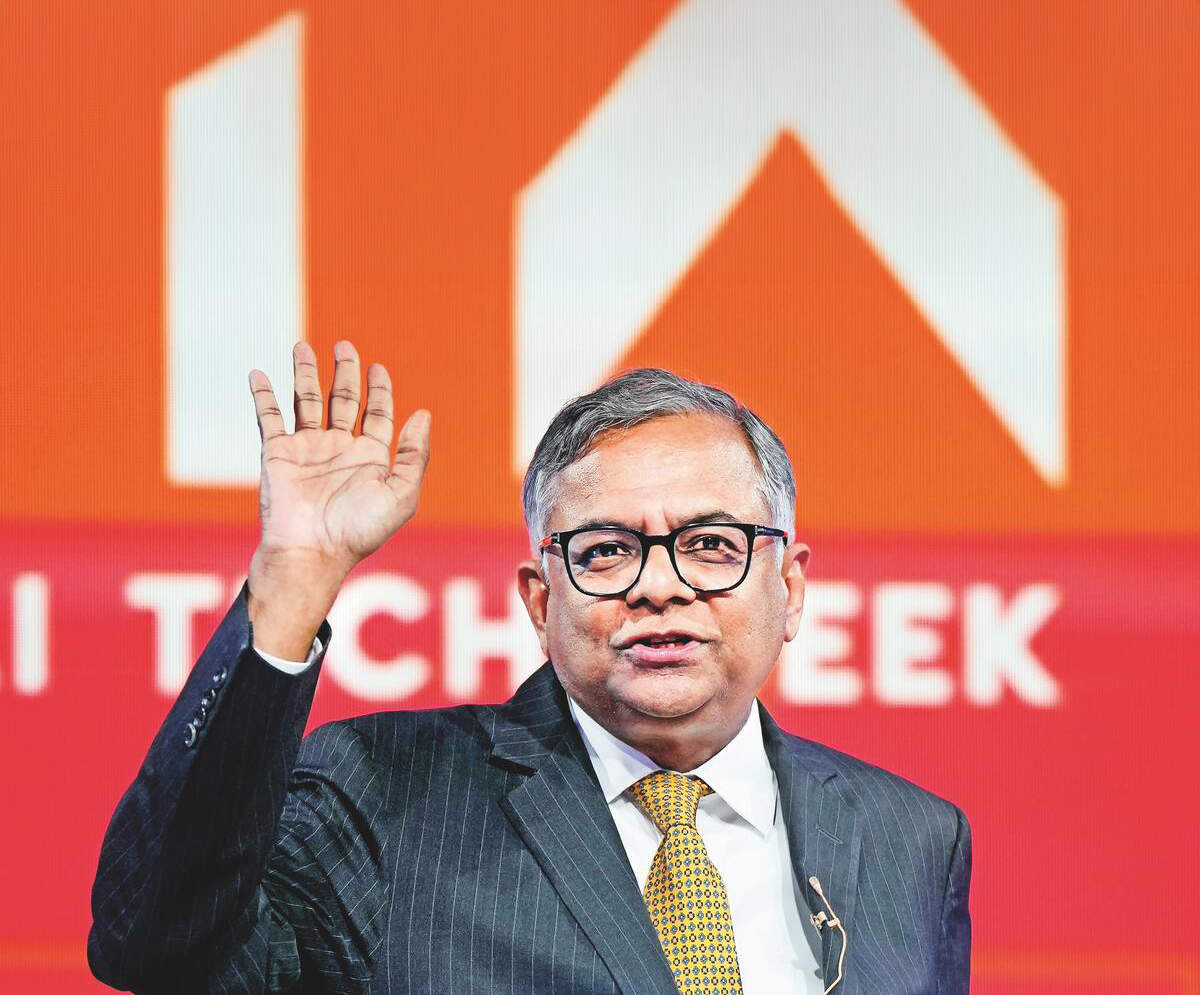
N Chandrasekaran, the present chairman of Tata Sons, resigned last Wednesday. Although he will stay till Feb 2027, he will not seek reappointment. It brings to a close a sad and painful internal conflict over the past six months, exposing tensions over leadership and governance between Tata Sons (the managers) and Tata Trusts (the owners). It is a classic case of diverging shareholder interest vs longer-term interest of the business. Many companies have faced it.
By several measures, Chandrasekaran (‘Chandra’ to his friends) has a good track record. Tata Group’s aggregate revenue rose from Rs 7,89,000 crore in FY20 to Rs 16,24,000 crore in FY26, while profit after tax increased more than fivefold from Rs 32,000 crore to Rs 71,000 crore. At the same time, the market value of Tata’s listed companies rose from Rs 9,31,000 crore to Rs 24,39,000 crore. Chandra resigned because of a lack of clarity among owners about his long-term leadership, which he said was “affecting many strategic projects under critical stages of execution.”
The second player in the drama, Noel Tata, is chairman of Tata Trusts, which owns two-thirds of Tata Sons. He has a legitimate fiduciary concern for returns and capital preservation. Acting like a visionary CEO, Chandra made bold multi-billion-dollar bets in new areas —semiconductors, electronics, and electric vehicles. Noel worries about returns, especially Air India’s huge losses. Although it wasn’t Chandra’s decision alone, he envisions a world-class national airline that requires enormous investment. Noel only sees that Air India’s losses have more than doubled from Rs 10,859 crore in FY25 to Rs 22,238 crore in a single year. This comes at a time when the group’s formidable cash cow, TCS, looks bland with weak future prospects in the AI age.
The question of the hour is: who will succeed Chandra? The answer matters because Tatas is not an ordinary family business. It is a national jewel, trusted widely for integrity and professionalism. However, succession has always been complicated at Tatas. Unlike other business houses, which invariably have many claimants to the throne, Tatas don’t seem to have children. More than a hundred years ago, Dorabji didn’t have children, and the top post went to a cousin. It was then passed on to JRD, who wasn’t a direct descendant either. And he too had no children. Sensibly, Tatas had created trusts to house the family’s ownership, which also suited their wonderful passion for philanthropy. Today, Noel has a son, Neville, who has been inducted into Tata Trusts.
Chandra was the first non-Tata, non-Parsi chairman of the group, and he has proven that a non-family professional can succeed. The choice of the next head of the Group is an opportunity to appoint the best professional available, who will not only be custodian of a grand 158-year-old institution, but also lead India’s growth story into the future. A ‘professional’ will send the right signal to India Inc, telling them to go for the best, who is probably not your son or daughter.
Members of the search committee should be open-minded and blind to gender, nationality, colour, creed, or caste. The only concern should be to ensure the candidate has the ability to navigate India’s complex ecosystem. He or she should possess an independent personality, and be able to say ‘no’ to Noel Tata. Be wary of choosing someone who is considered ‘pliable’, a ‘continuity candidate’, or worse, a ‘convenient compromise’. Most importantly, the process should not become a contest between factions.
All things being equal, an insider would be better. Tatas has a unique culture that can be daunting, even frustrating to an outsider. Moreover, Tata companies contain an enviable wealth of outstanding candidates. There is also virtue in promoting from within: it motivates the rest of the organisation. At Procter & Gamble, my former employer, ‘promote from within’ was a religion and training of talent was an obsession. As a result, P&G never had to look outside to fill a job at any level.
The Tata succession is bigger than the Tatas. It is a test of whether Indian capitalism has matured from family ownership to institutional stewardship. The best succession would be in which the Tatas demonstrate that the institution is larger than the family, nudging our companies to evolve gradually from family capitalism to a more mature managerial capitalism.
Disclaimer
Views expressed above are the author’s own.