








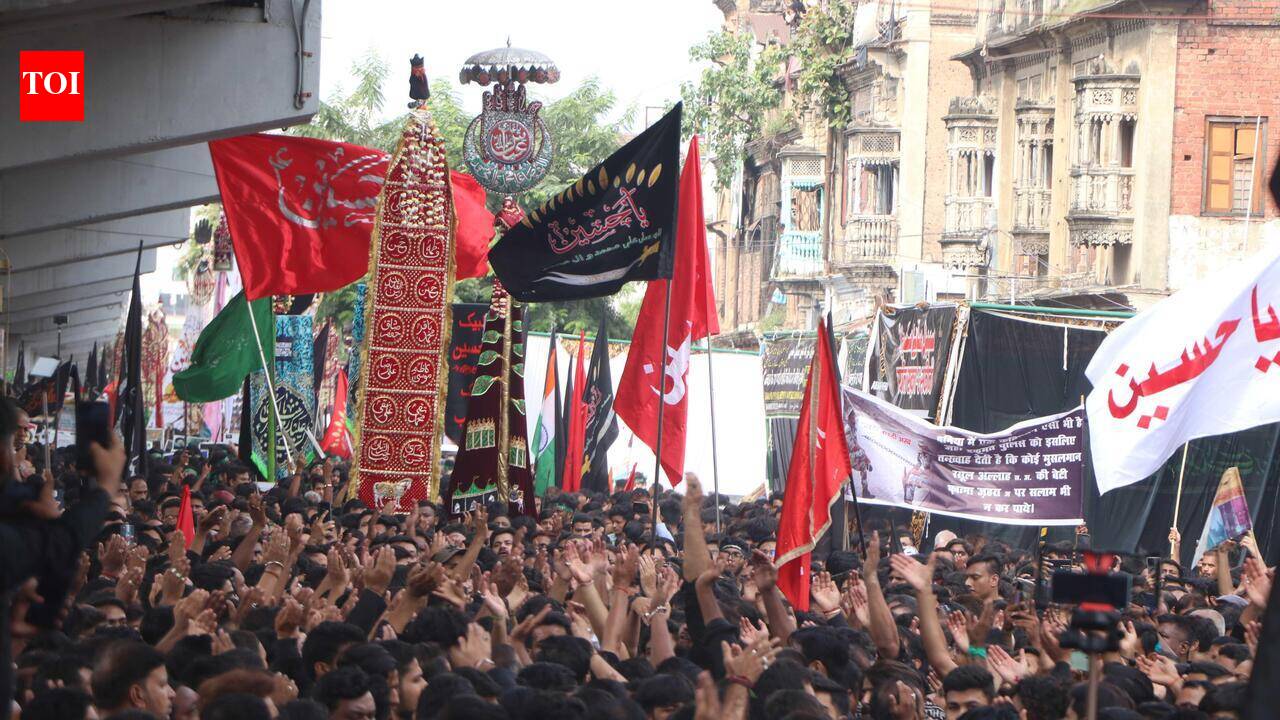
Mehmood M AbdiChehlum of the martyrs of Karbala, that is, the 40th day of their martyrdom, falling on Aug 4 this year is an annual event in the Islamic Calendar.The word ‘Chehlum’ is rooted in the Persian word ‘Chehel’ meaning forty. Chehel qadam (forty feet light stroll) and Chahelkunji ka pyala – a bunch of small forty keys kept in an alloyed cup inscribed with Quranic Verses are all drawn from this Persian word.To undo any evil influence water stirred in the cup with forty keys is offered to the person.However, in Arabic ‘Chehlum’ is called ‘Arbaeen’ meaning forty. With more exposure to west Asia, expression in India is getting altered.Now, Chehlum is more heard as Arbaeen even in Lucknow, a prime seat of Shia culture deeply rooted in Persian ethos.In Chehlum each year, millions of people from different nationalities walk to the shrine of Imam Hussain in Iraq. This walk is called Mashi which has been practiced for centuries except when Saddam Hussain prohibited it.In replication on Chehlum in Lucknow devotees from the outskirts of the city walk to Karbala Talkatora.In the aftermath of tragedy of Karbala (680 AD), when the entire family of Prophet Mohammad was massacred by the army of the Tyrant Umayyad King Yazid Bin Muavia, Imam Zainul Abedien, the only surviving son of Imam Hussain and the women and children of Hussain were taken prisoner.Suffering a year long ordeal of being paraded city after city in the then Islamic territories and having suffered the harshness of a roofless prison of Damishq (Damascus) where they were exposed to daylong sun and cold desert nights for a year.On their release Imam Hussain’s sister Hazrat Zainab, instead of celebrating their release, asked for a house where she could hold gatherings of women. For three days, the story of Karbala was told to Damascus women. These gatherings formed the basis holding Majlis during Muharram which we find today. As a convenience to the attending women from baking breads for their families, breads were distributed among those women.This act added a further element to the memory of Karbala – distribution of ‘Tabarruk’ (blessed food) in Muharram Majlis even to this day. Over the years with change in food habits, Muharrum Tabarruk has also diversified.Fancy and luxury food are distributed. Still, ‘roti’ is considered as the most pious article to be distributed in Majlis,Before returning to their home in Medina, the Karbala captives preferred to first visit Karbala. Unlike today’s majestic shrines in Karbala, the place was then a plain field on the banks of river Furat (Eupharates).However, in that field there were mud graves of martyrs of Karbala. How those graves of Hussain and his 72 companions could come about is entrenched in the curious fact that when on 2nd of Muharrum Imam Hussain reached Karbala and he was surrounded by enemies, he negotiated with the tribe of Banu Asad who were the nearest inhabitants of Karbala and owned some land over there.Hussain purchased that land from them and donated it to them with a request that after he and his companions were killed, Banu Asad should give them a proper burial.Hussain had foreseen that Banu being very harsh people would not bury them and leave their corpses unattended. Banu Asad lived their promise to Imam Hussain and on 11th and 12th of Muharrum buried the martyrs and kept it secret.To recreate that memory, on 11th of Muharram every year the tribe of Banu Asad comes in large groups to Imam Hussain shrine in Karbala carrying symbolic burial material with them.A year later, it was the 20th day of ‘safar’ month when Imam Hussain’s captive family reached Karbala. Incidentally, 20th of ‘safar’ came to be a full forty days of martyrdom of Imam Hussain and his companions.In Muslim society, after a death, 40 days of mourning is observed, which is called Chehlum.Chehlum is observed like Ashur (10th Muharram). People who keep their ‘tazias’ till this day take out their ‘tazias’ for burial in Karbalas. Alam processions are taken out. In Lucknow, Karbala of Meer Khuda Baksh in Talkatora is the main Karbala where all processions converge.With time, many Lucknow-specific Chehlum features have vaned. ‘Fateh Nishan’ (sign of victory) ‘chhad’ (bamboo staff) were very tall staff made of joined bamboo poles with an ‘Alam’ placed atop.The person carrying that pole used to display acrobatic skills like balancing the pole on his chin, both sides of palm, shoulder, and chest.Late Aghai Mirza of mohalla Kazmain was the ‘ustad’ of this talent. He had many ‘shagirds’ (disciples). Achhu Nawab Sahab of Bazaza was his main ‘shagird’.Till 70 years ago, different communities displayed their skill through ‘tazias’.A ‘tazia’ made of barley leaves is still an attraction on Chehlum in Karbala Talkatora. Likewise, ‘Bandar walon ka tazia’ (‘tazia’ of nomads who show monkey and bear performance).In the past 40 years, Chehlum articles have undergone visible change in Lucknow. Extra tall and strange looking ‘alams’ have replaced the medium-height crafted traditional ‘alams’.Iraq and Iran made Muharram banners and flags are seen in abundance. They look the same at every place, Lucknow or London, Baghdad or Boston. Globalization has overwhelmed local traditions.(Writer is an exponent of oral history and culture)