









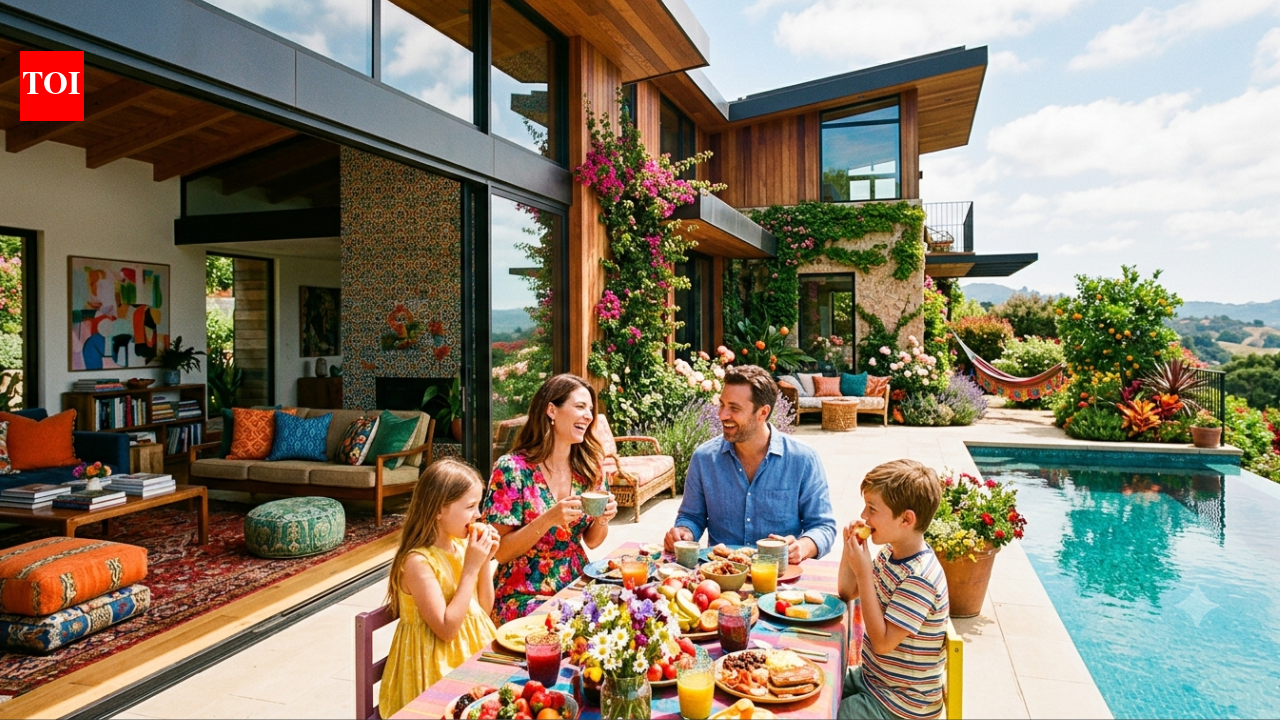
Ask anyone who has lived in Mumbai, Delhi or Bengaluru long enough, and they will tell you: the city does not just tire you out. It gets inside the walls. The commute, the noise, the sheer density of other people’s lives pressing against yours. At some point, coming home stops feeling like relief and starts feeling like just another version of the same thing. For years, the luxury housing market’s answer to this was more. Bigger lobbies, better fittings, amenity lists borrowed from resort hotels. The implicit promise was always escape through acquisition. That promise, it turns out, was not quite keeping up with what people actually needed.
Luxury housing is shifting from looking impressive to feeling better
What is changing, and changing fast, is the basic question developers are being asked to answer. Not “what does luxury look like?” but something harder: what does it feel like to actually live here?The numbers suggest this is not a fringe concern. India’s wellness real estate sector, meaning homes designed with health and wellbeing as structural priorities rather than add-ons, was valued at $13 billion in 2024, more than double what it was in 2019, growing at over 20% annually according to the Global Wellness Institute. Premium homes above ₹1 crore, meanwhile, captured 62% of all residential sales in the first half of 2025, up from 51% the year before. These are not numbers that belong to a moment. They belong to a shift in priorities, one being driven, more than anything, by a generation of buyers who are globally exposed, psychologically literate, and increasingly unwilling to settle for homes that look impressive but quietly work against them.Designers and architects who are tracking this seriously will tell you it is less about a checklist of features and more about an underlying intention: to build spaces that hold people rather than merely house them. That shows up in a few specific ways.
Why air, light and greenery are becoming the new markers of luxury
Take the question of air and light. In cities where AQI readings regularly tip into ‘unhealthy’ territory for months at a stretch, the quality of what you breathe inside your own home is not a wellness footnote. It is a daily health decision. Research on biophilic design has consistently shown that natural light, greenery, and proper ventilation reduce cortisol levels, improve sleep, and restore the kind of cognitive clarity that sustained urban stress slowly erodes. The better developers are building this in from the brief stage: courtyards that pull daylight deep into a floor plan, cross-ventilation that actually functions, air filtration as infrastructure rather than appliance, green walls that are load-bearing in every sense but the structural one.Then there is the question of proportion. This one gets less attention than it deserves. A room that is poorly proportioned, or acoustically thin, or laid out in a way that offers no real sense of enclosure, registers as stress even when you cannot name why. Neuroscience has been quietly building a case for this for years: that the body responds to spatial quality in measurable ways. The shift in luxury residential planning reflects this: away from the open-plan maximalism of the last decade and toward something more considered. Rooms that can actually close. Layouts that allow for solitude at one end and sociality at the other, without one bleeding into the other.
The rise of homes designed for privacy, quiet and genuine rest
Community is the third strand, and perhaps the trickiest to design for. The older model of gated living was really about keeping things out, and it showed in the architecture. Perimeter walls, security checkpoints, amenity blocks that nobody used. What is emerging now is something different: low-density master planning that makes informal encounter possible, shared spaces that have genuine warmth rather than brochure-worthy photographs, a sense that neighbours might actually know each other. India Sotheby’s International Realty found that 60% of luxury buyers in 2024 were specifically seeking customised wellness spaces or private gardens, and while the wellness angle is obvious, the privacy angle is just as telling. People want community on their own terms.Privacy deserves its own mention here, because it has quietly become one of the most coveted things money can buy. In a world of constant connectivity, hybrid working, and the particular strain of never quite being off, the ability to find genuine stillness inside your own home is not a nice-to-have. For a growing number of buyers, it is the point.
For India’s luxury homebuyers, wellness is becoming the ultimate status symbol
None of this is happening in a vacuum. Knight Frank’s Wealth Report 2024 projects India’s ultra-high-net-worth population will grow by nearly 50% by 2028. Sotheby’s International Realty’s Luxury Outlook survey found that 71% of affluent Indians were planning to buy a luxury home within the next one to two years. The demand is real, it is growing, and it is coming from people who have enough exposure to know what good design actually looks and feels like.The most interesting developers working in this space right now are not leading with square footage or specification sheets. They are asking a different question altogether, one that sounds almost too simple to be a design brief: how does it feel to come home after a hard day?The answers are showing up in quieter corridors, in materials chosen for how they age rather than how they photograph, in layouts that make space for both work and genuine rest, in communities where the design actually encourages people to slow down. It is a less flashy vision of luxury than the one India’s residential market has historically sold. But it is a more honest one, and increasingly it is the one that people with real choices are choosing.Sahil Vora, Founder, SILA