





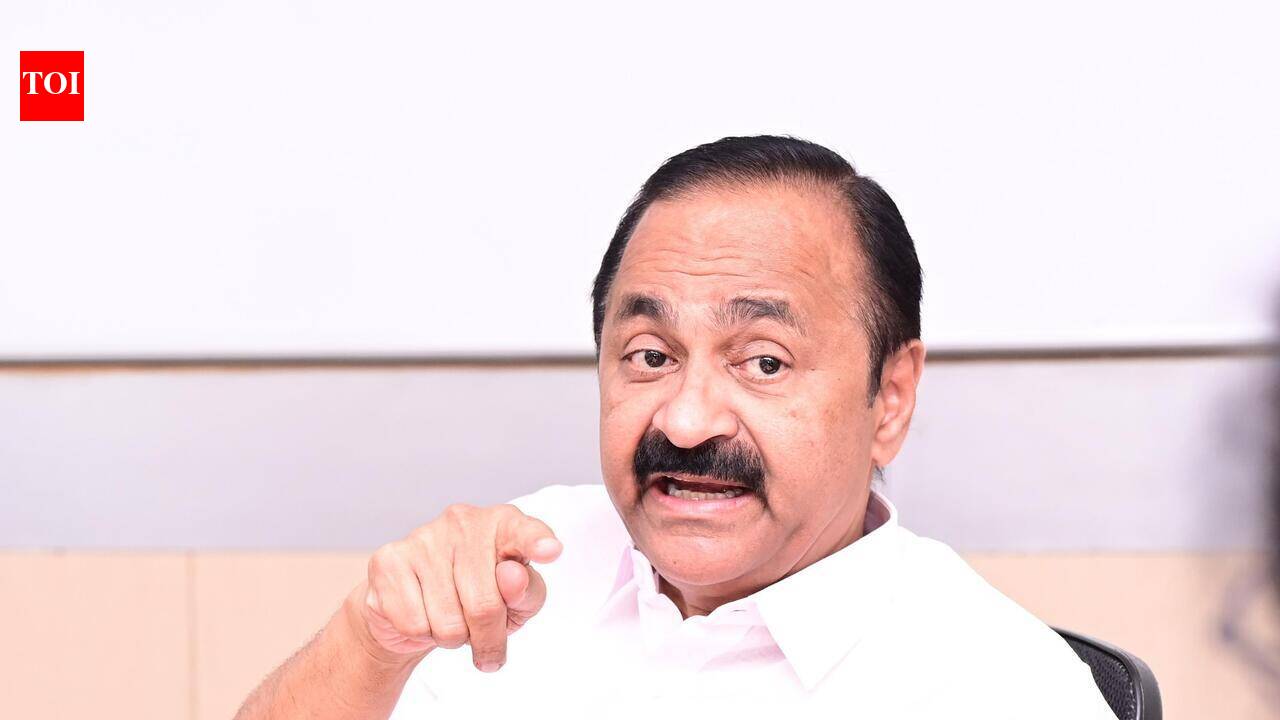
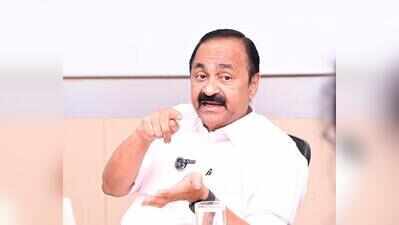
Studying issues thoroughly and moving forward based on convictions are the keys to Kerala’s development, says chief minister V D Satheesan as he discusses his vision, including plans to attract investment, strengthen public healthcare and tackle climate challenges, in an interaction with TOI at its Kochi office.What are the key initiatives that will shape Kerala’s future over the next two decades?Our immediate priorities are to transform Kerala into one of India’s leading maritime and logistics hubs, strengthen its position as an aviation hub, boost the MSME sector, and drive sustainable, innovation-led economic growthWhen I was opposition leader, we often criticised the govt and said it had failed. But I also asked myself: What is our alternative? That led us to begin a series of policy discussions two years ago. We started with an education conclave, bringing together academics to examine why students were leaving Kerala and the reasons behind brain drain. The discussions yielded valuable insights. We then held a health conclave, where we learnt about WHO initiatives that place greater emphasis on mental health and loneliness. That is when the idea emerged to position Kerala as a destination for health and education.Kerala has both strengths and limitations. Much of our land falls under the Forest Act, Paddy Land Act and Coastal Regulation Zone norms, making large-scale industrialization difficult. Given our high population density, we cannot rely on polluting industries. Instead, we must build on our natural advantages.About 23 years ago, I visited Singapore and was told that its port was the backbone of the country’s economy. I remember thinking Kerala had even greater potential. I also visited Jebel Ali and Seattle and consulted experts in the maritime and shipping sectors. That eventually led to the concept of developing Kerala as a port-led economy by integrating two international seaports, a container terminal and 18 minor ports. The response has been encouraging, with several companies showing interest, and we expect projects to start taking shape within six months. The same approach applies to aviation. Kerala has four international airports, two of them under govt control, giving us a strong foundation to emerge as an aviation hub.Before becoming chief minister, you had said you could do much more for Kerala if given the opportunity. After 60 days in office, what feedback have you received on initiatives such as Priyadharshini?Priyadharshini was conceived not merely as a welfare scheme but as a way of empowering women and promoting savings. That is why we introduced the Pink Chitty. We have received an encouraging response, particularly from working women, including those who commute daily from Paravur to Kochi and in Thiruvananthapuram. The response to the Port City project has also been positive. We have also set up a department for senior citizens, the first of its kind in the country. Kerala cannot frame policies without taking demographic change into account. By 2036, senior citizens are projected to make up 38% of the state’s population. We studied models in Japan and Florida before designing a silver economy policy. We plan to train caregivers and have already prepared a draft policy. We also intend to introduce legislation to provide legal protection for senior citizens. Our objective is to make senior citizens active contributors to the economy. For instance, a young entrepreneur may have technical expertise but lack managerial experience. We can bridge that gap by connecting them with retired professionals, who will be paid an honorarium for mentoring them. These initiatives will come under the One Kerala Karuthal Mission.As chief minister and party leader, what is the biggest challenge you face within the govt and the party?The biggest challenge is breaking away from conventional thinking. That is not just a problem within the party; it is a trait of our society as a whole. We need to study issues thoroughly, engage with people, build a strong team, develop our own convictions and move forward accordingly. Take the recent controversy over ADGP M R Ajith Kumar. Soon after this govt assumed office, we ordered an inquiry and obtained a preliminary report. It was criticized because no immediate action was taken. But can an officer of the rank of ADGP be suspended solely on the basis of a preliminary report? Would such an action stand legal scrutiny? The final report had to be examined, the seriousness of the allegations assessed, and the officer given an opportunity to be heard before a decision could be taken. That process takes time. Yet the media accused the govt of shielding him. When he was eventually suspended, the narrative shifted again—that the govt had acted only under media pressure. In reality, it was the same due process that was followed from the beginning.Like reverse remittance, most beneficiaries of education loans are foreign colleges. Higher education sector is a big area of concern. How are we going to address it?Earlier, we talked about remittance economy. Those going to Europe won’t remit back to state, unlike those going to the Gulf. They buy a house there and face life-long debts. They then avail social welfare schemes and take their parents there. They rarely invest in state or remit back money. But the Gulf diaspora remit money, and also return and invest here. A main reason for brain drain is that our courses are outdated. The courses, which we (older generation) studied, still exist. Now, seats lie vacant for PG, many MSc, MA courses and the like. This is because knowledge explosion is happening on a big scale across the globe. Even a student graduating from an engineering college finds the subjects get outdated.Hence, we introduced a new concept and set up Global Job Watch tower. Today’s jobs will vanish tomorrow, especially when artificial intelligence and quantum computing, etc, are growing. While existing jobs vanish on one side, new jobs are being created. Under Global Job Watch tower, we are classifying various sectors and entrusting them to experts. They will monitor changes happening in each sector and report to us. We will have to effect curriculum changes correspondingly. We will start new courses and connect with industries. Once we start suitable academic courses relevant to industries, these students will get good jobs. But here in state, those in university syndicates discuss everything other than academics.Recently, when we discussed port city, I suggested that related academic programmes be started. For eg. Maritime Law, Logistics, Maritime History, Maritime Finance. We can accommodate a substantial number in such courses. We’re starting Artificial Intelligence centres. Many youngsters are coming out with brilliant ideas; we need to support them.Many foreign private universities have unsuccessfully attempted to launch their centres in state. Will we encourage such institutions?We have announced Knowledge Valley concept, which will be started at many places. We need to bring in new legislation for that as the existing one regarding private universities is not sufficient. We will give permission to private and foreign universities to establish their centres here. Presently, there is no legal provision for granting nod to private universities to set up their centres here. Our main attempt is to establish centres of major legacy universities here. Our team will go abroad and invite them. For eg. We can give all provisions for London School of Economics to start their campus here. Not only Keralite students, we can bring in students from outside too, thus making Kerala an education destination. Many good universities have expressed interest.We aim to bring in the bills on universities and senior citizens during legislative session in Sept. We’ve started the process of preparing a draft bill for higher education. Even now, many of our children go abroad and study in institutions which don’t have the standards of universities here but they don’t realize it.The universities will form their teaching and other staff and many of our people will get jobs. It is a concurrent subject; we can make legislation. We’ve started identifying land. If we can have 300 acres, we can bring in 15 or more universities.The financial scenario of the state is weak. How do we aim to address it?There is no point in attempting conventional measures. Increasing taxes is not a solution. It needn’t necessarily result in revenue increase. Two years ago, petroleum cess was hiked by Rs 2. I had objected to it while in opposition. Even now, petroleum rates in Kerala are higher than in other states. The main petroleum consumers in our state are trucks bringing in goods from outside. However, a year after hiked cess, petroleum consumption went down by 1.5 crore litre. The truckers bought fuel from bordering states, and we ended up with less revenue.Now, modern thinking is to widen tax network, rather than increasing taxes. Our plan to overcome the situation is better financial management and prevent leakage from the exchequer. Leakages are happening mostly during project implementation. For eg. we plan a project of Rs 100 crore in a year. But the project drags on for five to 10 years, and we end up incurring Rs 1,000 crore. A project in Kothamangalam, for which Rs 30 crore was allocated in 2016, DPR hasn’t been prepared yet.We need to build a system with a project implementation protocol; there should be accountability, etc, to ensure timely project implementation. To stimulate the economy, there should be more economic activities and investments.There should be private investments. Govt is not competent to run businesses but can play a facilitator role. That’s why when we focus on ports and aim to increase facilities there, the aim is out-of-harbour activities like logistics parks, warehouses, fisheries, blue economy, etc.We want to develop and integrate various ports across state. We want to shift logistics from road to water. We also want to explore the scope of tourism through river cruise, etc. We have now revived the oceanarium project, which was first mooted more than 15 years ago. We’ve prepared a project report and revised estimates. We aim to start setting up an oceanarium in Kochi in six months. We’re also planning an international maritime museum. We’re in talks with curators outside to realize the project. We’re identifying land and finalizing the theme. Similarly, we are setting up a cultural park of MT (Vasudevan Nair), and film city. All these will prop up tourism.You have proposed setting up new courts in Kerala. Could you elaborate?Kerala does not have an admiralty court; maritime cases are currently handled by the court in Mumbai. With ports expanding and maritime activity increasing, the number of such cases is bound to grow. About a decade ago, when the Maritime Law Bill was being discussed in the assembly, I realized how little expertise existed in the state. I couldn’t even find a maritime lawyer in Kerala. Eventually, I located one in Mumbai and spent hours discussing the subject over the phone. The next day, I spoke at length on maritime law in the assembly, and the response was overwhelmingly positive. We also need dedicated arbitration courts.Will the Centre-State relationship improve under the new govt?We have not started any new disputes with the Centre, nor have we declared war against it. One criticism against me is that I have not taken an aggressive stand. But a budget is not the place to fight political battles. We have ideological differences with the Centre, and those will be fought politically. At the NITI Aayog meeting, I pointed out how Kerala has been affected by the 16th finance commission’s recommendations. Under the 10th finance commission, Kerala’s share in tax devolution was 3.5%. It fell to 1.92% in the previous Finance Commission and has now increased to 2.32%. We had expected a higher share. The previous finance minister had budgeted for 2.8%, so the lower allocation resulted in a loss of nearly Rs 5,000 crore. Under the 15th Finance Commission, Kerala received revenue deficit grants, and it was projected that the state would get about Rs 14,000 crore. The 16th Finance Commission has discontinued those grants. Combined with the Rs 5,000-crore shortfall in tax devolution, Kerala has lost nearly Rs 19,000 crore. Revising the budget under such circumstances has been extremely challenging. The Centre had also allowed states an additional 0.5% borrowing limit for power sector reforms and encouraged us to undertake projects on that basis. We proceeded accordingly, but are now being told that the amount cannot be treated as borrowings. That has created further financial strain.Kerala is expected to face the impact of El Niño. Are we prepared for the related challenges?We began preparations even before the onset of the southwest monsoon, holding meetings with the Kerala State Disaster Management Authority to assess the situation. We are already seeing its impact in the form of a power crisis. Electricity demand is now about 1,000 MW higher than last year. Who would have imagined we would need air conditioners in July? While demand is rising, power generation has declined because of weak monsoon rains, a trend seen across the country due to El Niño. We also have to prepare for climate change-induced disasters. That requires a robust early warning system, with artificial intelligence integrated to deliver more precise forecasts.Your remarks on interstate migrant workers and the outflow of their earnings sparked controversy. What is your take on the criticism?I never meant to insult migrant workers or suggest they should leave Kerala. In fact, when many of them returned to their home states during the assembly elections there, several firms in Kerala faced acute labour shortages and had to suspend operations temporarily. The money they earn here is sent back to their home states, just as Keralites working in the Gulf send money home. If more of that income were spent in Kerala, it would boost economic activity and increase GST collections. That is why we need to integrate migrant workers into mainstream society and facilitate their stay here, just as Malayalis have integrated into Mumbai, Bengaluru and other parts of the world.The govt has announced a Rs 25 lakh health insurance scheme for every family in the state. What is the status of the initiative?A basic framework for the scheme is being prepared. We first need to conduct a health survey, study various models and identify the most suitable one for Kerala. We are examining successful healthcare models implemented in Rajasthan and Andhra Pradesh.Public healthcare infrastructure has improved, but manpower remains a challenge. How will the govt address it?The public healthcare system must be strengthened to meet the growing demand, as treatment costs in the private sector are rising sharply. They are likely to increase further as overseas companies acquire major hospitals in the state. Diagnostic tests are also becoming increasingly expensive. Under the One Kerala Karuthal Mission, we are exploring the use of CSR funds to set up affordable diagnostic centres. If the model succeeds in one place, it can be expanded across the state. Those who can afford private healthcare may continue to use it, but middle-class and poor families need access to quality diagnostics at reasonable rates. We also need a protocol to prevent hospitals from exploiting patients through unnecessary and excessive tests.Many of the proposed health and education projects will require Central assistance. How do you plan to obtain it?We are assessing it. Similar issues exist in civil supplies, including paddy procurement. We had submitted audited statements for Rs 1,200 crore, and the funds are now being released. We have also put in place a better coordination mechanism in Delhi. For the first time, we convened a meeting of Kerala cadre officers posted there. Take the Urban Challenge Fund, for instance. Kerala is eligible for about Rs 15,000 crore, but detailed project proposals were not submitted. We have now asked all municipalities and corporations, including Kochi, to prepare projects to access Central funds. Andhra Pradesh has utilised the scheme effectively.We have also identified several Central schemes for ports, logistics parks and related infrastructure. If we submit well-prepared proposals, we can secure those funds. These are not favours from the Centre—they are funds to which Kerala is entitled. Our focus is on ensuring the right procedures are in place so the state gets its due share.PM Shri is a similar case. The previous govt had already signed an MoU, and there is no provision for the state to withdraw from it. Only the Centre can terminate the agreement. A cabinet sub-committee is expected to submit its report this week. We have only two conditions: There should be no interference in Kerala’s curriculum, and the state govt should have the authority to select the schools to be included under the PM SHRI scheme. If these conditions are accepted, we have no objection to implementing it. Several other states have done the same. Once the previous govt signed the MoU, it made little sense to argue that the state should not proceed with it.You recently participated in the protest in Delhi. What was your experience?The NEET paper leak deeply affected young people across the country. Students spent months preparing, many attending coaching classes by taking loans. After going through all that, they were asked to retake the examination because of the leak. The uncertainty placed enormous mental stress on them, and some even died by suicide. The Centre failed to treat the issue with the seriousness it deserved, triggering widespread anger among students. Instead of responding sensitively, it tried to suppress the protests. In such a situation, the minister should have taken moral responsibility and resigned pending an investigation. If found innocent, he could have returned. That has always been India’s democratic tradition. The systemic flaws should then be addressed to ensure such incidents are not repeated. The same principle applies to the alleged irregularities in Kerala PSC recruitments. We have ordered an inquiry. The cabinet has also decided that all vacancies in govt departments must be reported within three weeks. One major problem is that vacancies are sometimes not reported because of backdoor appointments, depriving candidates on the PSC rank lists of opportunities.We are creating a system to ensure all vacancies are reported and officials are held accountable. If vacancies are deliberately concealed, action will be taken. We are also considering making vacancy details public.If the US-Iran War escalates, it could trigger a significant job crisis in the Middle East. How prepared is Kerala to deal with its impact?It is a very serious issue and could have a major impact on Kerala. When I see images of missiles raining down, I worry about the consequences. I have already raised the matter with the Centre. There are several concerns. Kerala is heavily dependent on remittances, and an escalation could lead to job losses in the Gulf, forcing many Keralites to return home. Rising oil prices could also fuel inflation. Kerala has recorded the highest inflation in the country for several months. We have requested a special package from the Centre, and I will raise the demand again when I meet the Prime Minister and the finance minister. Just when we were hoping the conflict would end, it escalated again. I have also urged Keralites investing in the region to consider investing in Kerala, as this could create new opportunities for the state.The digitalisation of land records was meant to simplify the process. Why has it ended up making things more complicated?The problem arose because people recruited through the employment exchange were appointed as surveyors. They completed the measurements, but in many places the land had no boundary walls or fences. As a result, adjoining properties were sometimes measured as a single parcel. In many cases, the landowners were not even called to verify the survey. In Ernakulam district alone, more than 7,000 complaints have been received from 15 villages, including over 500 from a single village. We have decided to resolve all complaints through special adalats before Oct 31, within the first 100 days of the govt.Delays in disbursing e-grants are causing hardship for tribal students pursuing higher education. How will your govt ensure timely disbursal?We have directed officials to disburse all pending e-grants without delay. I was the first to raise this issue in the previous assembly. Our position is clear: no student should be forced to discontinue their education because an e-grant has not been released. If any such cases remain pending, the govt will intervene and ensure they are resolved.