





More than 30,000 fire ant nests have been destroyed on Gold Coast council land since 2022, but the acting mayor says his confidence in full eradication remains “pretty low”.
A report to the council has outlined the city’s response after the invasive species broke containment in recent years, marching on to infest much of south-east Queensland.
That prompted the City of Gold Coast to establish its own fire ant suppression team, with the number of nests detected soaring from 13 in 2022 to more than 13,000 last year.
Acting Mayor Mark Hammel said he was “alarmed and pleased” by the number of nests destroyed.
“While the early signs are pleasing, there’s a long, long way to go,” he said.
“They are superb at multiplying out so my level of confidence of completely eradicating them is pretty low.”
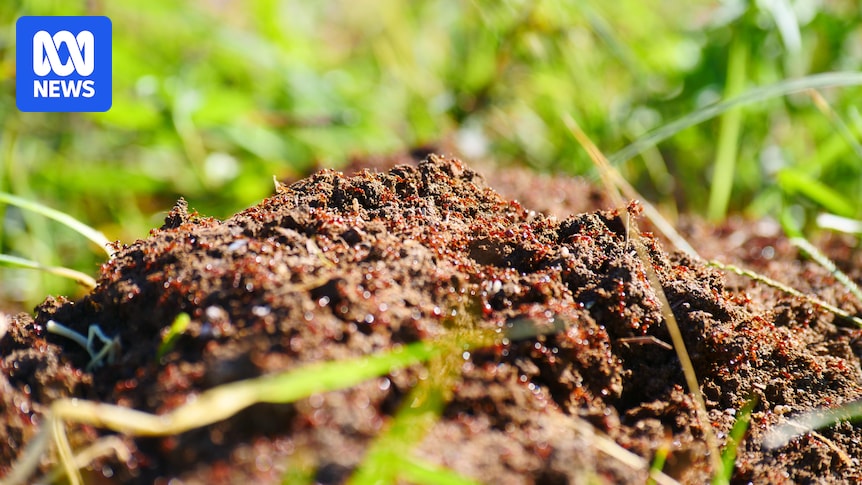
Fire ants can fly up to 5 kilometres in a day and float across waterways. (Supplied: Invasive Species Council)
The report estimates fire ants could drain $176 million a year from the Gold Coast economy if left unchecked, while their sprawling nests threaten parks, beaches and other recreational areas.
“During this time, only one park has been closed, resulting in limited disruption to weekend sporting and recreation activities,” the report stated.
‘Final push’ some time off
The spread of the invasive species has surged in recent years, infesting more than 800,000 hectares in south-east Queensland.
Breakout incursions have also been detected in northern New South Wales and central Queensland, with fire ants hitchhiking on planes, boats and trucks through materials like mulch and turf.
A $592 million program established an eradication zone around south-east Queensland in which teams from the National Fire Ant Eradication Program directly destroy nests.
The eradication zone (red) moves inwards as fire ants are wiped out. (Supplied: National Fire Ant Eradication Program)
Within that is the suppression zone, where private landholders and councils are responsible for keeping fire ant populations under control, until eradication efforts progressively constrict towards the coast.
“We’re the last place for the final push to eradicate them,” Cr Hammel said.
“[But] instead of having to eradicate millions, we might only be dealing with tens of thousands of nests.”
The Queensland government has spent $61 million over the past two years to assist suppression efforts, treating 186,000 hectares of land across the south-east.
A sign for the national fire ant eradication program (ABC Gold Coast: Dominic Cansdale)
Primary Industries Minister Tony Perrett said early results showed an 86 per cent reduction in fire ant densities but that success depended on “all levels of government, industry, and the community continuing to work together”.
An earlier review of the National Fire Ant Program found slow communication and unchecked misinformation had undermined public confidence but that eradication remained “feasible”.
A spokesperson for the program was not available to comment.