








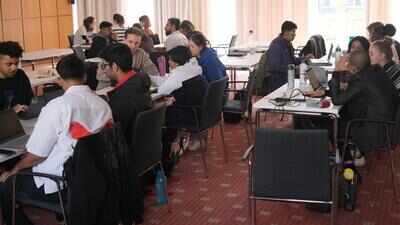
For decades, Indian students pursuing postgraduate study abroad have faced the familiar trade-off of leaving India entirely for a foreign degree, or staying and settling for a domestic one with limited international recognition. Joint and dual-degree programmes, common in parts of Europe, have been slow to take root in India’s higher education system, particularly in specialised fields like environmental science.That is beginning to change. A small but growing number of Indian universities are entering formal co-degree partnerships with European institutions, arrangements where students are enrolled at both universities simultaneously, rather than simply spending a semester abroad. One such programme has just begun admitting its second cohort of students in the environmental sustainability space, and its structure looks nothing like a typical semester abroad. Now imagine beginning your postgraduate studies in Pune, immersed in India’s extraordinary ecological diversity, its sacred groves, its river systems, its fast changing urban landscapes, and completing your degree in Cologne, one of Europe’s leading centres for sustainability research and policy. Not as an exchange student. Not on a short fellowship. But as a full, registered student of both institutions, earning a single internationally recognised degree.As per the University, the Joint International Master’s in Environmental Sustainability (JIMES) is India’s first truly joint postgraduate programme in environmental sustainability, co-designed and co-delivered by the Bharati Vidyapeeth Institute of Environment Education and Research (BVIEER), Bharati Vidyapeeth Deemed University, Pune, and the University of Cologne, Germany. Students are simultaneously enrolled at both universities, spend semesters on both campuses, work under the supervision of professors from both universities, and graduate with a degree that carries the authority of two renowned institutions across two continents.
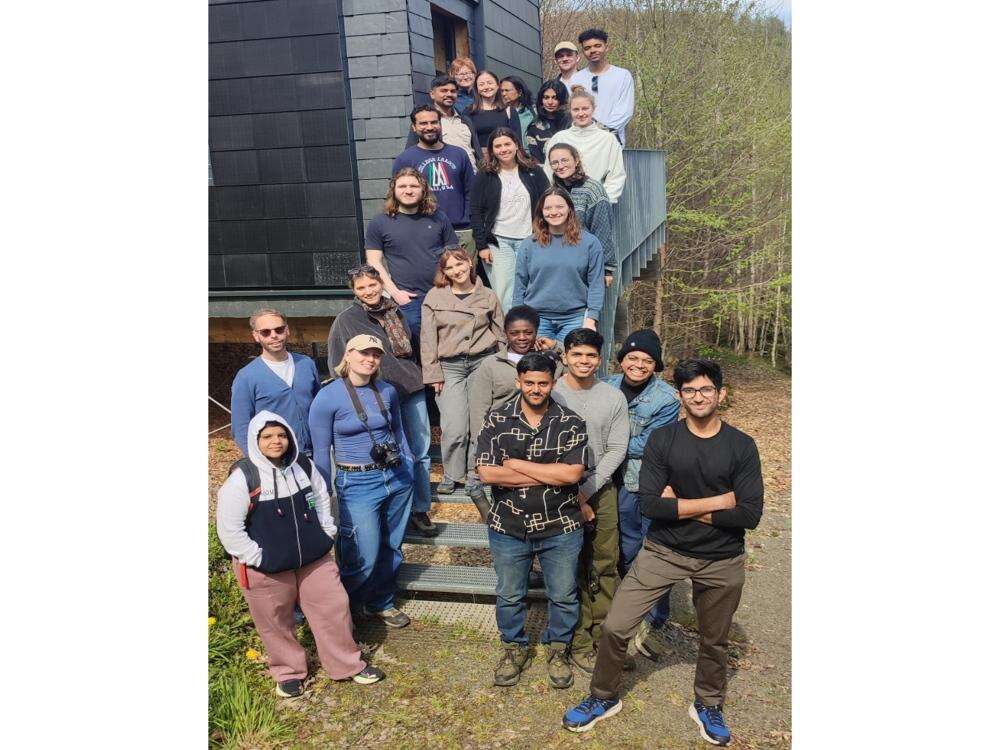
Why joint degree? Why environmental sustainability now?
The green transition is expected to create a net gain of 9.6 million new roles globally by 2030, according to a World Economic Forum report1. Climate change, biodiversity loss, unsustainable urbanisation, and the push for credible ESG reporting do not respect national borders. Neither do the careers that address them. Yet, most postgraduate programmes in India continue to have a national focus, while pursuing a master’s degree abroad may not be a feasible option for every student. Green hiring is already growing at almost twice the rate of the supply of workers who actually possess green skills, a gap that exists across all 47 countries analysed by LinkedIn’s Green Skills Report2. The professionals who will shape the next decade of climate action are not specialists in silos. They are integrators, bridge-builders, and boundary-crossers. JIMES says it brings the international learning experience to students on Indian terms, with genuine exposure to European environmental policy, field practice, and academic rigour. The result is a programme built for Indian students who refuse to choose between quality and proximity.
What the programme offers
JIMES is a two-year master’s programme structured across four semesters. Semesters 1 and 2 are rooted in India, building foundations in environmental science, geoinformatics, nature-based solutions, sustainability policy, and research methods, all taught through a problem-based, transdisciplinary approach that draws on India’s own rich ecological and philosophical traditions.As students advance, the curriculum deepens into comparative study, examining how Germany and India approach forest governance, urban biodiversity, river restoration, and climate policy differently, and what each can learn from the other. The third semester in Germany places students inside the University of Cologne’s research ecosystem, with access to European field sites, faculty, and networks.Across both locations, the teaching philosophy is consistent: sustainability cannot be taught from a textbook alone. It must be practised in the field, in policy rooms, and across cultures. Students learn to work with GIS and remote sensing tools, conduct ecological assessments, analyse policy frameworks, and communicate findings across cultural and professional contexts.
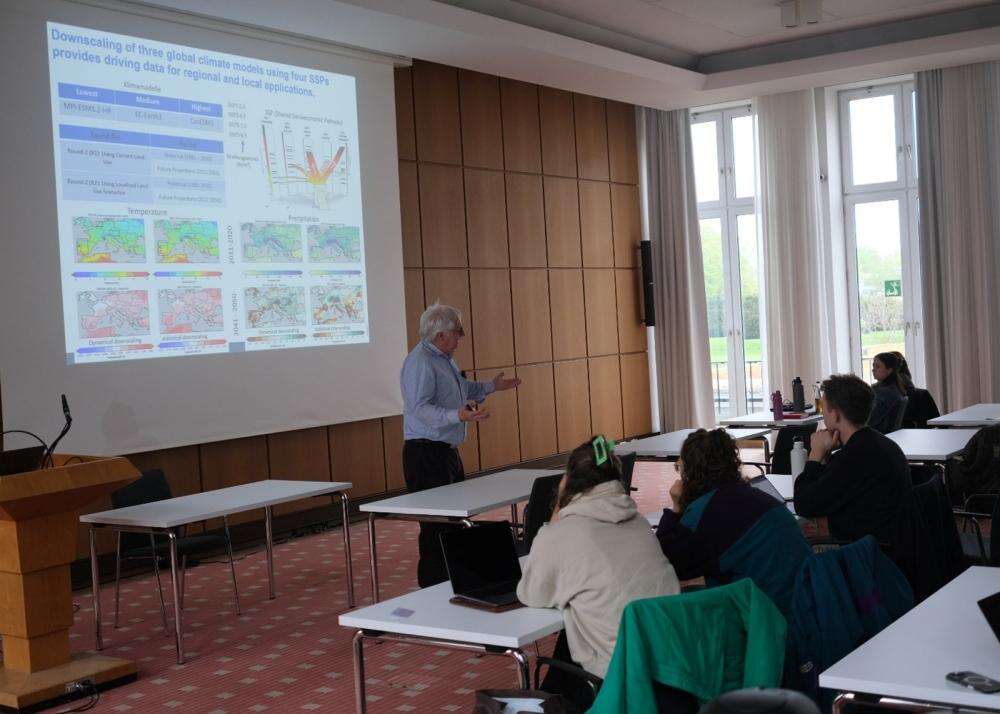
Who is this for?
JIMES is designed forgraduates from science, social science, geography, and related disciplines who want more than a conventional postgraduate degree. It isfor those who are curious about how environmental challenges are understood and addressed differently across cultures and governance systems, and who want to build the analytical and practical skills to contribute to solutions.The programme particularly suits students who aspire to careers in international environmental organisations, conservation bodies, sustainability consulting, government policy, research, and academia. India already has over one million green jobs and has seen among the fastest growth in green employment in the world in recent years, according to IRENA3 and the ILO4. JIMES graduates carry a credential recognised in both the Indian and European professional landscapes, a rare advantage in a field where cross-border fluency is increasingly valued.The institutions behind the degreeBVIEER has been at the forefront of sustainability education in India for over three decades. Through its work with government, international agencies, and local communities, BVIEER brings deep national credibility and international reach to this partnership.The University of Cologne, established in 1388, is one of Germany’s oldest and most respected universities, with strong research programmes in geography, sustainability science, and environmental humanities. Together, the two institutions offer students something neither could provide alone: a truly bicultural, bilingual learning environment with roots in both the Global South and the Global North.The inaugural cohort has already commenced, with admissions now open for the next batch.Reference/s: Disclaimer: This article has been produced on behalf of Bharati Vidyapeeth by Times Internet’s Spotlight team.