







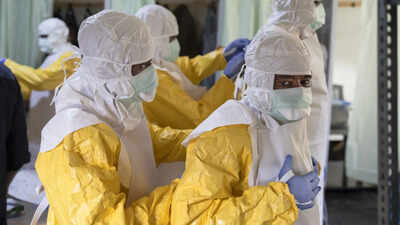
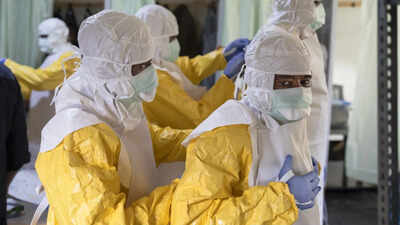
More than 700 people have died in the latest Ebola outbreak tearing through the Democratic Republic of the Congo — the worst the country has ever seen. Health officials confirmed over 1,900 cases as the Bundibugyo strain, a version of the virus that’s rarely seen, pushes across eastern Congo, even reaching Uganda. The numbers are concerning, and fighting the outbreak has been a nightmare. There’s no approved vaccine for this particular Ebola strain and no specific treatment, which leaves people on the ground grasping for tools that don’t really exist.Back in May, the World Health Organization declared the outbreak a global health emergency. Still, it’s been impossible to get ahead of the virus. War, rumors, attacks on clinics, even strikes by unpaid health workers — all of it is making the situation even worse. Basic efforts like contact tracing or getting patients to clinics just aren’t happening as they should.However, in the middle of the chaos, there’s actually some hope.Per AP News, scientists at the University of Oxford started the world’s first human trial for a vaccine made to fight Bundibugyo Ebola. It’s a huge step, honestly. Experts think it could really change how these outbreaks play out in the future. The only catch: it’s going to be a long wait before people can actually get this shot.
Why is this Ebola outbreak different?
For starters, Ebola isn’t just one virus — it’s a whole family. Most people have heard of the Zaire strain, which caused the massive West African epidemic from 2014 to 2016 and many Congo outbreaks. For years, we’ve had vaccines and even some treatments for that. But this time, it’s Bundibugyo. No vaccine. Nothing approved. It’s a strain that first showed up in Uganda back in 2007, and frankly, the world’s been unprepared for it.The numbers speak for themselves. Nearly 2,000 cases and more than 700 dead, and those are just the ones people know about. The virus is spreading, not just in the original hot spot of Ituri Province, but into cities and across provinces. The fear? If it reaches enough big urban areas, it’s going to get even harder to stop.
The vaccine breakthrough: What’s the latest update?
As reported by Reuters, Oxford researchers just kicked off the very first clinical trial of their vaccine candidate, which they’re calling the Phase I trial. Known as BD-Ebov, the study will evaluate a vaccine candidate called ChAdOx1 BDBV, which is built on the same chimpanzee adenovirus platform that Oxford previously used in developing its COVID-19 vaccine, i.e., using a harmless chimpanzee virus tweaked to show Bundibugyo Ebola proteins. The idea is to teach the immune system what to watch out for. They’re starting small, with just 50 healthy volunteers, all adults, all in Oxford. The scientists will monitor everyone closely, mainly to see if the vaccine’s safe and gets the right kind of immune response.
When could the vaccine be ready?
Although the researchers are pushing for a swift process to make the vaccine work, it’s advisable not to expect a miracle cure any time soon. This kind of clinical trial is step one. If it works and doesn’t cause major side effects, they’ll need bigger trials. Researchers will have to test it in more people and in places where the virus is actually spreading. After that, come the regulatory reviews, then figuring out how to produce it at scale. And since it’s in its early days, that whole process could stretch out over years.
Are there any treatments for Ebola available now?
Right now, people in the DRC don’t have a real treatment for Ebola. Doctors are trying two experimental approaches: think remdesivir (an antiviral) and something called MBP134, which is a lab-made antibody. Both have shown a little promise in the lab. But it’s still a bit of a shot in the dark for Bundibugyo. For now, the best anyone can do is old-fashioned supportive care: keeping people hydrated, helping them breathe, treating infections, and hoping patients can pull through.
What exactly is Ebola?
Ebola virus disease is a severe viral hemorrhagic fever that spreads through close contact, such as blood, body fluids, and even contaminated objects. Symptoms of the disease appear fast, like fever, headache, muscle pain, sore throat, then vomiting, diarrhea, stomach pain, and sometimes bleeding inside and out. Without medical care, Ebola often kills by causing organ failure and shock. With quick treatment, some people do survive.Given the current battle-like situation, this new Ebola vaccine trial could be a game-changer. We already have vaccines for the Zaire strain but nothing for Bundibugyo, and this outbreak shows what that means. The world’s been caught off guard. The Oxford trial won’t end the suffering today, but it lays groundwork for tomorrow. If everything works out, next time this virus shows up, health workers might have a weapon ready. And maybe, just maybe, thousands of lives won’t be lost.