








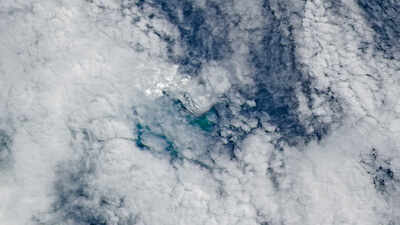
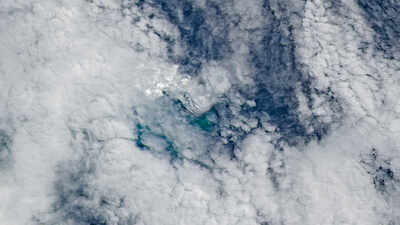
The open ocean often seems like a permanent fixture of our planet, a vast expanse of blue water that can appear unchanged for generations. However, nature has a spectacular way of reminding us that the surface of the Earth is constantly moving, shifting, and creating new landscapes. Far out in the western Pacific Ocean, an incredible geological event is unfolding right now, and it might just result in the birth of a brand new piece of land.Deep beneath the surface of the Bismarck Sea, an underwater volcano has awakened from its slumber with immense energy. It is releasing massive plumes of steam, reshaping the ocean floor, and sending vast amounts of volcanic rock floating across the water. While this dramatic activity is happening in a remote and largely unmapped part of the world, it is not going unnoticed by science.A report published by the NASA Earth Observatory, titled New Eruption in the Bismarck Sea, reveals how scientists are currently using an array of advanced space satellites to monitor this rare birth of an island from orbit. By observing the ocean from hundreds of kilometres above, researchers are gaining a detailed look at how our planet builds new landforms in real time.Space technology tracks a hidden underwater giantThe dramatic sequence of events first began when scientists detected a sudden swarm of earthquakes rumbling beneath the waves. Shortly after these subterranean tremors, space sensors began picking up undeniable signs that a major submarine eruption was underway. Within hours, several sophisticated space platforms, including the Aqua and Terra satellites, captured striking images of massive white columns of steam rising directly out of the open ocean.As the days progressed, the underwater activity intensified significantly. Another cutting-edge satellite, known as the Plankton, Aerosol, Cloud, Ocean Ecosystem platform, noticed that the surrounding ocean water had turned an unusual, vivid green colour. This strange colour change can happen when an erupting volcano releases fluids, sulfurous gases, and rock fragments into the sea, altering the water chemistry.Experts quickly realised that the active volcanic vent was much closer to the surface than previously thought. Modern space instruments measured significant thermal anomalies rising from the site, covering an area of roughly seven square kilometres. Simon Carn, a leading volcanologist at Michigan Technological University, pointed out that the presence of such massive heat signatures means a huge volume of molten material has pushed its way very close to the ocean surface. This suggests that the volcano is rapidly building itself upwards, defying older nautical maps that showed the ocean floor sitting hundreds of metres deep in this specific region.
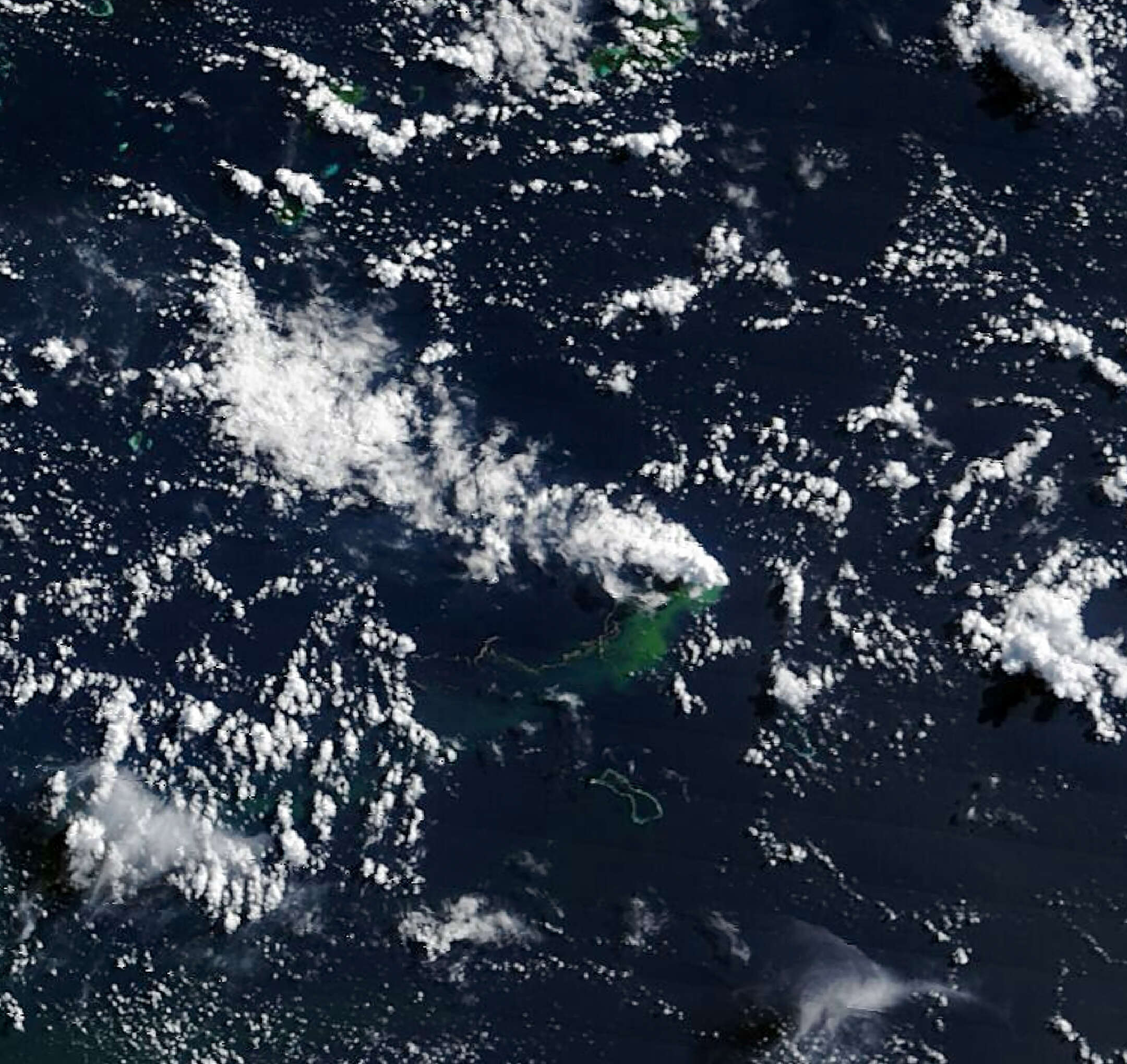
The volcano’s location near tectonic plate boundaries allows for stable magma rise. This eruption may create a new island, offering a unique research laboratory. Image Credit: NASA Earth Observatory/Michala Garrison
What happens when fire meets the frozen oceanThe unique way this volcano is behaving is largely due to its geographical location. It is growing along an underwater structure, which sits near the complex intersection of major tectonic plate boundaries. Because it is located near a spreading centre where tectonic plates are gently moving apart, the eruption has been relatively stable rather than violently explosive. Magma quietly rises to fill the widening gaps in the Earth’s crust, slowly expanding the underwater platform day by day.However, the situation could easily change if the structural integrity of the volcano shifts. If the rising magma chamber suddenly cracks and allows a massive volume of cold seawater to rush in, the eruption could become much more explosive. For now, the volcano continues to churn out vast quantities of a light, porous volcanic rock known as pumice. These rocks can float on water and drift long distances across the sea.Scientists are watching the area closely to see whether the volcano will breach the waves and create a permanent new island. Jim Garvin, the chief scientist at NASA’s Goddard Space Flight Center, explained that if a stable landmass does manage to form, it will offer a spectacular laboratory for researchers. Some have jokingly called future visitors “island-nauts.” These scientists would be able to study how plants, insects, and animals slowly colonise a new piece of Earth. Interestingly, understanding how life takes hold on a newly formed Pacific island could even help space agencies prepare for future human exploration missions to the Moon and Mars. For now, the growth in the Bismarck Sea continues.