








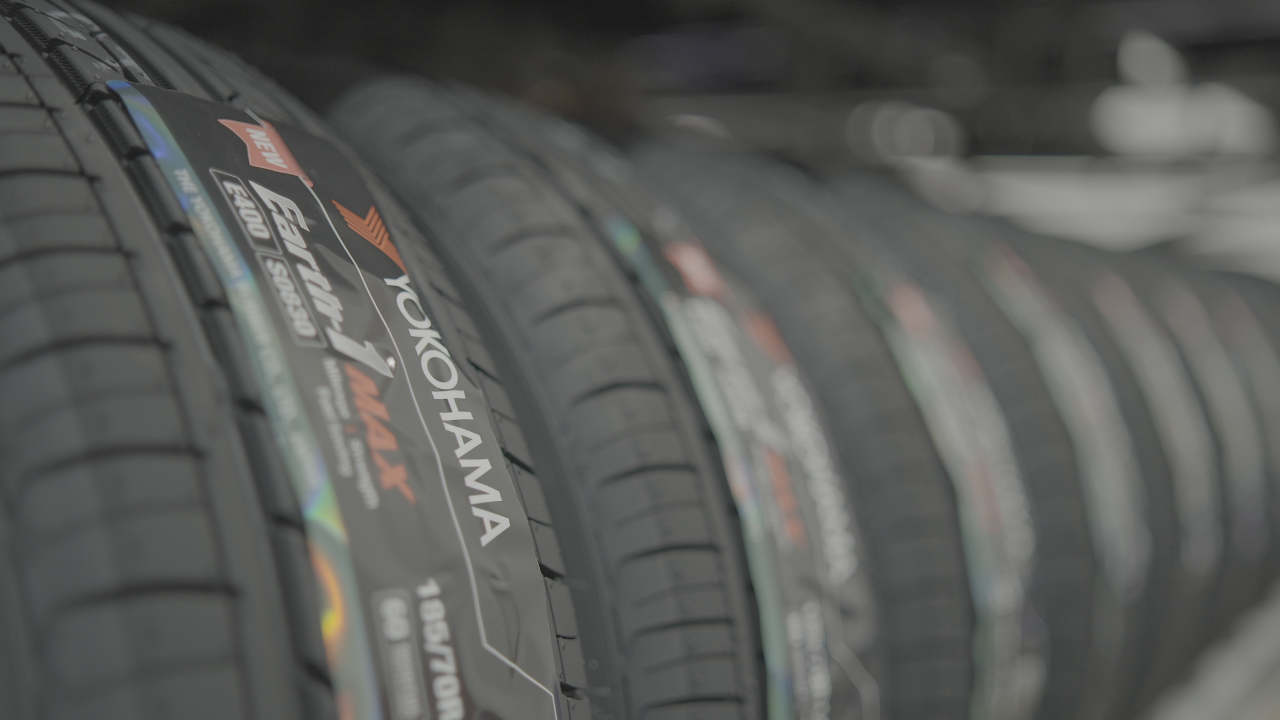
We recently visited Yokohama India’s manufacturing facility in Visakhapatnam, Andhra Pradesh, to gain a firsthand understanding of how modern tyres are produced. The tour covered the entire manufacturing process, from handling raw materials and production stages to quality inspection and dispatch of finished tyres. It also highlighted the technology, engineering and testing involved in ensuring each tyre meets the company’s standards for domestic and export markets. Although tyres rarely attract as much attention as engines or vehicle design, they remain the only point of contact between a vehicle and the road, playing a key role in grip, braking, ride comfort and fuel efficiency. For most owners, replacing worn-out tyres is routine, but the processes behind their production are rarely seen.
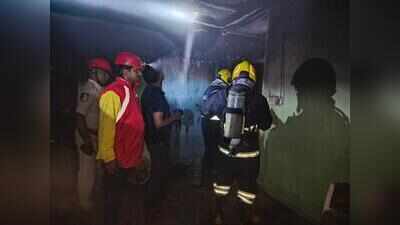
Our tour of Yokohama India’s manufacturing plant in Visakhapatnam started with an overview of the facility, providing an understanding of how one of the company’s biggest production hubs is organised. The next stop was the material testing laboratory, where all incoming raw materials, including synthetic rubber, carbon black, silica and other compounds, are inspected before entering the production line. Materials that do not meet specifications are rejected, and suppliers are informed. Engineers also examine benchmark tyres and products that fail internal tests to study their construction and identify improvements for future development.The facility also houses a Skill Development Centre that trains recruits from Andhra Pradesh and neighbouring states through a two-month programme combining classroom sessions with practical shop-floor training. The curriculum covers workplace practices, personal protective equipment, machine operations, automation systems and maintenance, followed by assessments before employees are assigned to production.Safety training forms an integral part of the programme. Employees are trained in fire prevention, lockout-tagout (LOTO) procedures, electrical safety and waste management before working on the factory floor. They are also taught to identify unusual odours, sounds and temperature variations around machinery and chemical storage areas to help detect potential issues at an early stage. Inside the manufacturing area, raw materials are stored through an organised inventory system, while automated handling equipment and barcode-based tracking ensure the correct compounds are supplied to each production process. Rubber compounding is carried out in multiple stages to produce different formulations based on the requirements of individual tyre models.
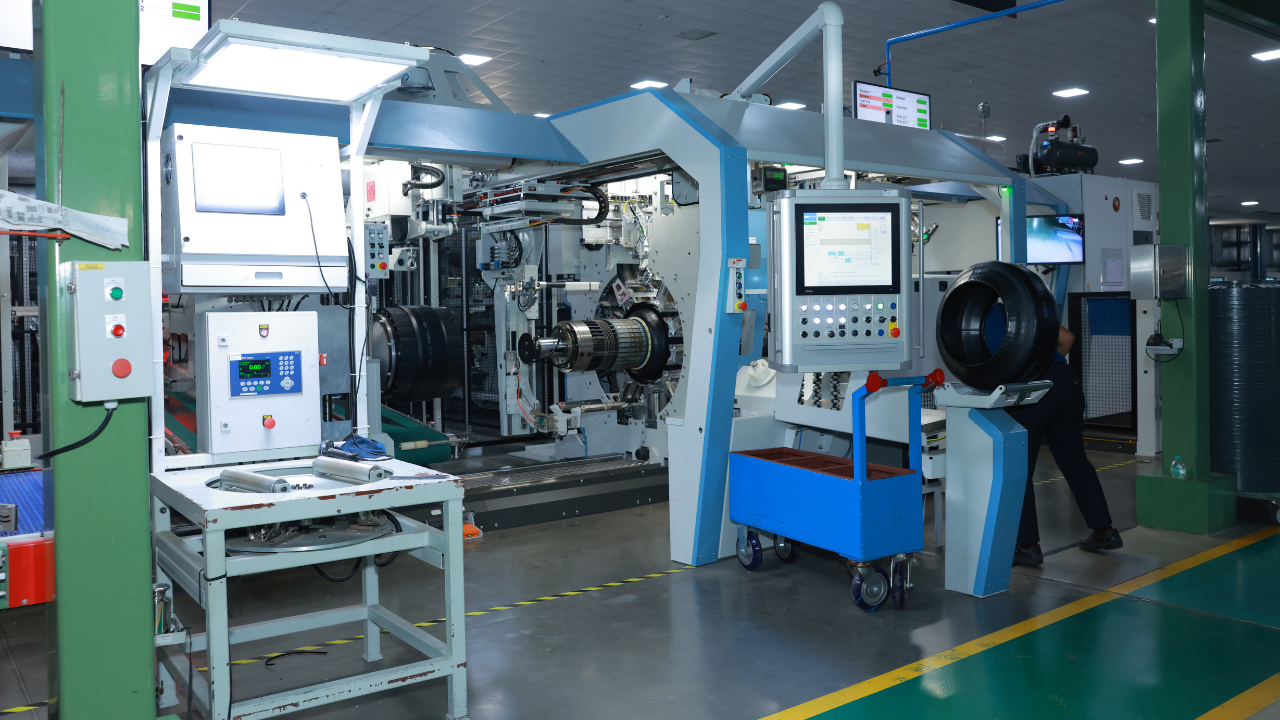
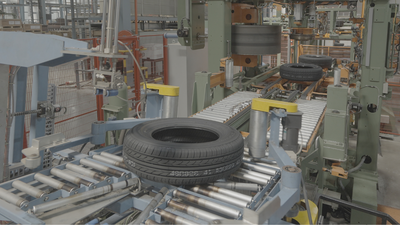
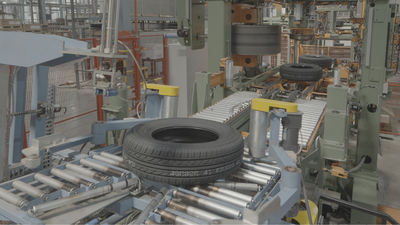
Manufacturing begins with extrusion, where rubber compounds are shaped into treads, sidewalls and other components using dedicated dies. These parts then move to the calendering section, where textile reinforcement materials are coated with rubber to form structural layers. Other operations, including bead manufacturing, steel wire preparation, bias cutting and splicing, are completed with close dimensional control to maintain consistency.The prepared components are then assembled into a green tyre. While the process is largely automated, operators continue to supervise key stages to maintain quality standards. Belts, tread sections and sidewalls are integrated before specialised coatings are applied ahead of the curing process. A key feature of the plant is Yokohama’s Unistage Tyre Building machine, which produces a complete green tyre in a single integrated process instead of multiple assembly stages. According to the company, the system improves production efficiency while maintaining dimensional accuracy and consistency.
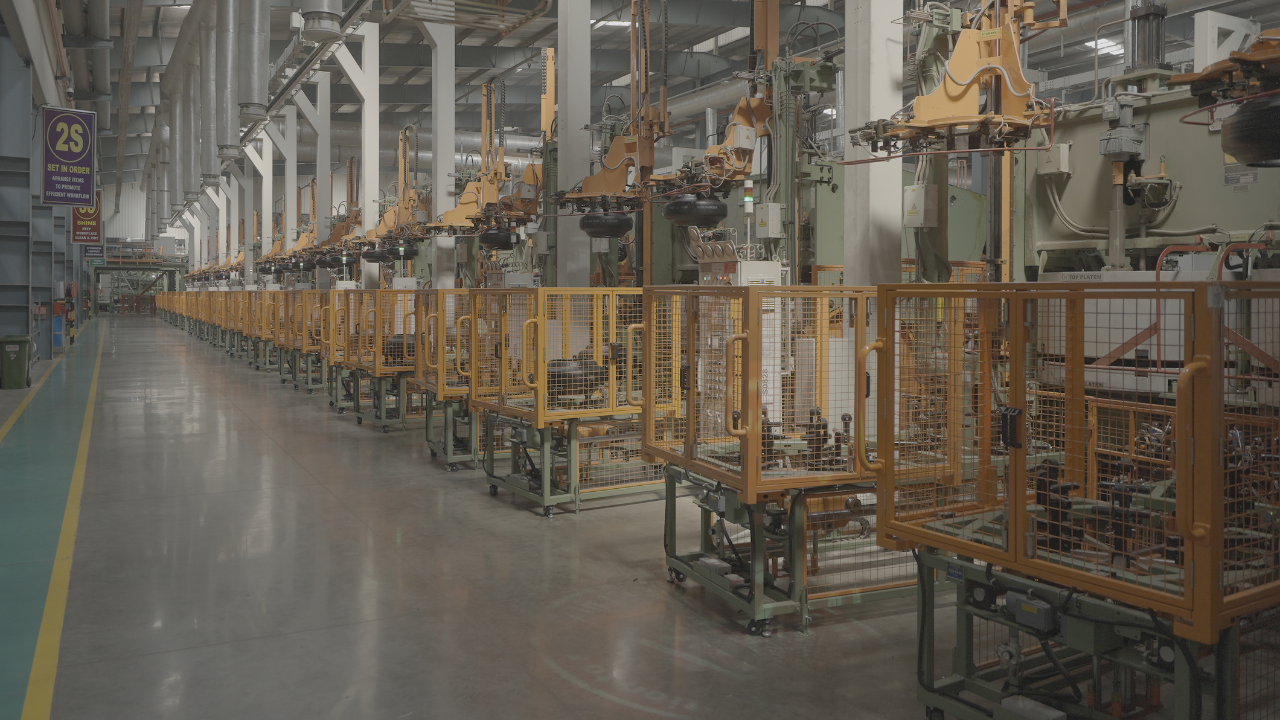
The final stage is curing and vulcanisation, where the green tyre is subjected to controlled heat, pressure and cycle times to achieve its final tread pattern, strength and elasticity before undergoing final inspection. The visit highlighted the manufacturing systems used at Yokohama’s Visakhapatnam plant. Along with automation, the facility relies on quality inspection, standardised production practices and workforce training to manufacture tyres for both domestic and export markets.Apart from the manufacturing process, Yokohama also highlighted the environmental measures adopted at its Visakhapatnam facility. According to company officials, the plant currently operates with a contracted power demand of 10.5 MW, of which 3 MW is sourced from rooftop solar installations developed through a third-party model. The company is also planning to add another 4.5 MW of solar capacity, bringing renewable energy’s share of the plant’s overall electricity requirement to well over 50 per cent.The company is also working to improve energy efficiency in its steam generation process. Officials explained that coal is primarily used to generate steam, but emphasis has been placed on recovering and reusing condensate to reduce fuel consumption. While recovery rates in similar industries typically range between 50 and 60 per cent, Yokohama said its Visakhapatnam plant currently operates at around 70 percent, helping lower overall energy use and reduce carbon emissions even as production volumes have increased.According to the company, its carbon footprint has remained largely stable despite higher production levels, with CO₂ emissions per tonne of production gradually declining through process improvements and efficiency measures. Officials said these initiatives form part of the company’s broader efforts towards reducing its environmental impact. Water conservation has also received significant attention. While officials said the industry typically consumes around 3-3.5 kilolitres of water per tonne of production, the Visakhapatnam facility operates at less than 2 kilolitres per tonne. The plant has a rainwater harvesting pond with a storage capacity of around 17 lakh litres, enabling rainwater collected within the premises to be reused. They also noted that although production has increased from around 30-50 tonnes to nearly 250 tonnes, the plant continues to draw almost the same quantity of fresh water as it did several years ago.Another key initiative is the plant’s Zero Liquid Discharge (ZLD) system, under which wastewater generated during manufacturing is treated and reused within the facility, ensuring that no liquid effluent leaves the site. Officials acknowledged that tyre manufacturing is often viewed as a polluting industry, particularly because of materials such as carbon black, but said several engineering and environmental measures have been implemented to minimise the plant’s environmental footprint. Carbon black, for instance, is stored in four enclosed silos, each with a capacity of around 120 metric tonnes, allowing the material to be handled safely while reducing dust emissions.