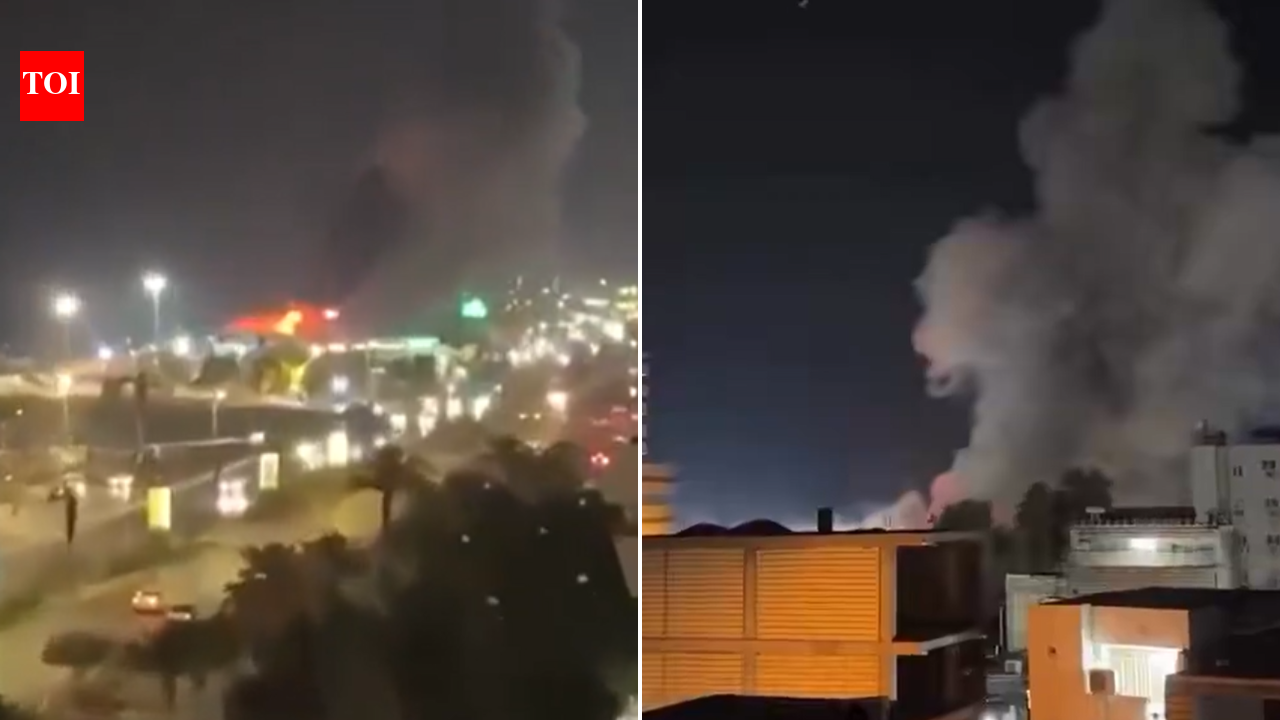








The Middle East edged closer to another major conflict on Wednesday after the United States and Iran exchanged military strikes, raising fears that a fragile ceasefire could collapse. The latest escalation began after Washington launched air strikes on more than 80 Iranian targets, accusing Tehran of attacking commercial vessels in the Strait of Hormuz.Iran swiftly retaliated, claiming it had struck dozens of US military facilities in Bahrain and Kuwait with missiles and drones. The exchange has heightened tensions across the Gulf, prompted missile alerts in neighbouring countries, and cast fresh doubt over planned diplomatic talks aimed at preventing a wider regional war.Here are the top developments: Iran launches retaliatory strikes on US basesIran’s Islamic Revolutionary Guard Corps (IRGC) said it had carried out a joint missile and drone operation targeting 85 US military facilities in Bahrain and Kuwait in response to American strikes. It also claimed to have shot down a US MQ-9 Reaper drone.The statement, carried by state broadcaster IRIB, described the operation as an “initial response” to what Tehran called American aggression. Missile alerts were reportedly activated in both Bahrain, which hosts the US Navy’s Fifth Fleet, and Kuwait, where US Army forces are stationed.Iran’s armed forces vowed to respond “decisively” and insisted they would not allow any outside power to interfere in the Strait of Hormuz. US hits more than 80 Iranian military targetsThe latest round of US strikes was carried out by US Central Command (CENTCOM), which said it targeted more than 80 Iranian military sites on July 7.According to CENTCOM, the operation was launched in response to Iran’s alleged attacks on commercial shipping in the Strait of Hormuz. The strikes targeted Iranian air defence systems, command-and-control networks, coastal radar installations, anti-ship missile capabilities and more than 60 IRGC fast attack boats operating near the strategic waterway.The US said the objective was to weaken Iran’s ability to threaten international shipping and warned that American forces remained prepared to respond if Tehran violated the ceasefire again. Fresh shipping attacks fuel Hormuz tensionsThe latest military exchange followed reported attacks on three commercial vessels transiting the Strait of Hormuz, one of the world’s busiest energy corridors.Washington accused Iran of striking the Marshall Islands-flagged M/T Al Rekayyat, the Saudi Arabia-flagged M/T Wedyan and the Liberian-flagged M/T Cyprus Prosperity, calling the incidents a violation of the ceasefire and freedom of navigation.Iran has not officially claimed responsibility. However, state broadcaster IRIB reported that the Qatari-linked tanker Al Rekayyat was targeted after allegedly ignoring repeated Iranian warnings and sailing through an Omani shipping route with US naval support.Tehran has repeatedly maintained that vessels transiting the Strait of Hormuz must follow routes designated by Iran, warning that it cannot guarantee the security of ships using alternative passages. Oil sanctions restored as diplomatic deal unravelsAlongside the military action, Washington revoked a temporary licence that had allowed Iranian crude oil exports under a memorandum of understanding signed in June.The United States described Iran’s actions in the Strait of Hormuz as unacceptable and said they warranted renewed economic pressure.Iran’s foreign ministry condemned the move as a clear violation of the agreement, while Parliament Speaker Mohammad Bagher Ghalibaf accused Washington of repeatedly breaching the deal. In a post on X, Ghalibaf said: “The era of bullying and extortion is over. It leads nowhere. We don’t fold.” Regional tensions rise as peace talks face uncertaintyIranian officials said there were no reported civilian casualties from the latest US strikes, although explosions were reported in Bandar Abbas, Qeshm Island and Sirik, with fires breaking out at port facilities.Iranian President Masoud Pezeshkian cut short his visit to Iraq, where he had attended the funeral ceremonies of former Supreme Leader Ayatollah Ali Khamenei, and returned to Tehran as the crisis intensified.
Us-Iran Conflict: Middle East on brink of war again as US-Iran trade strikes: Top developments