





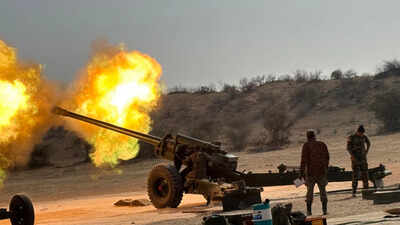
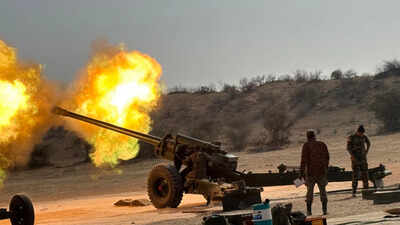
The operationalisation of the Integrated Battle Groups (IBGs) under the 17 Corps opens a new paradigm on how the army will mobilise and employ its tactical units. This move integrates these units into the army’s operational equations. An IBG is centered around the traditional infantry brigade that has been strengthened with the addition of artillery, air defence, engineers and armoured units with improved logistics, these additional units are normally allocated at the division or corps level. In the army three battalions or regiments form brigades, brigades form a division and which in turn are the main elements of a corps. Unlike traditional divisions, which may take days to deploy, the IBGs are designed to be deployed in 12 to 48 hours, this gives the army to respond more efficiently to an evolving situation.The operationalisation of the IBGs reflects lessons learned from recent tensions, in which the speed of deployment proved to be a critical factor. These formations are tailored for operating in different types of terrain to effectively project the relevant force across the different types of areas where they will be deployed. This combined arms approach integrates infantry, tanks, artillery and air defence under a unified command, with the aim of enhancing synergy and combat effectiveness. With integrated logistics, IBGs can sustain themselves in forward areas, providing both defensive capabilities and an offensive punch when required. The IBGs will be commanded by a Major General ranked officer.The army has also raised a Fire Support Group (FSG), along with the five IBGs that have been raised. The army has in the past stated that there would be armoured and mechanised infantry heavy IBGs as well. These formations will be tailor made for the tactical and geographical situation in which these formations will be deployed, especially in the plains and desert terrains. Additionally, IBGs associated with strike formations will also have more armoured units. The IBGs are a major reform in the army’s structure and doctrine, this comes at a time when the army is in the middle of what it calls ‘decade of transformation’.IBGs also serve as a deterrent by signalling India’s ability to respond quickly and decisively to sudden incursions or escalations along the nation’s vast frontiers. IBGs embody a doctrinal move away from large, static formations towards more modular and mobile combat groups more conducive with modern warfare. By maximising combat power with reduced deployment time, IBGs act as force multipliers, giving the army more combat effectiveness without raising additional units.