






The University of Wollongong’s human resources chief has told ICAC she felt she had “a target on her back” after opposing plans to directly appoint executive Alyssa White to a new role worth almost $400,000 a year.
The Independent Commission Against Corruption (ICAC) is investigating allegations that senior university figures improperly influenced recruitment processes and consultancy contracts.
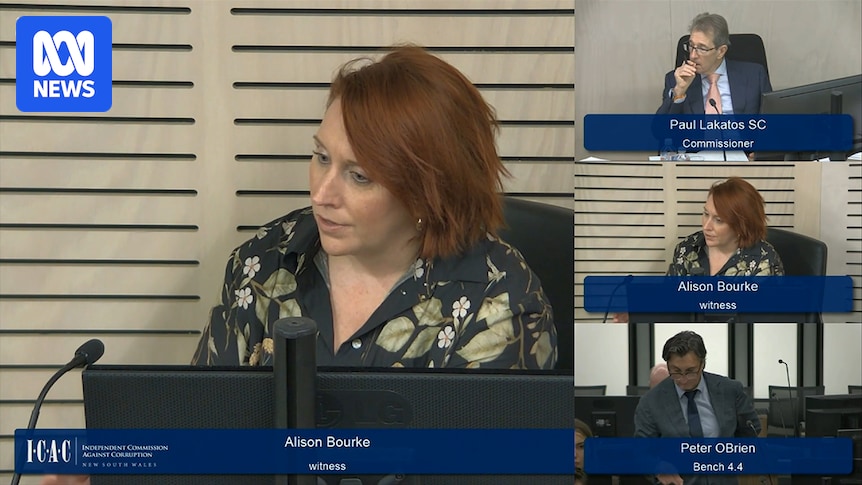
Chief people and culture officer Alison Bourke returned to the witness box for a second day on Wednesday, describing growing concern about the creation of a new vice-president, strategy and executive affairs role.
Ms Bourke told the inquiry she became concerned Ms White, who was then the chief governance officer, appeared to be involved in creating and promoting the role that Ms White herself expected to fill directly.
She argued the position should be advertised and filled through a competitive recruitment process.
Alison Bourke gave a second day of evidence to ICAC, describing growing concerns about the process used to create a proposed vice-presidential role earmarked for Alyssa White. (Image: Supplied NSW ICAC)
Ms Bourke said the proposal moved at a rapid pace ahead of incoming chancellor Max Lu’s arrival, with concerns escalating from initial discussions in late January to competing plans for the role within a fortnight.
By February 6, Ms Bourke’s contemporaneous file notes recorded concerns she had “a target on my back” for questioning the proposal.
She told the inquiry those concerns were reinforced when chancellor Michael Still told her that people and culture’s role should be “to just do whatever a manager tells them to do”.
‘Thought I was punked’
Ms Bourke said she sought independent advice from the university’s remuneration manager after claims the position had been assessed under its evaluation framework.
After checking with the university’s remuneration manager, Ms Bourke told the inquiry she believed claims the role had undergone an evaluation were “false” because no such assessment had occurred.
She believed the proposal had been put on hold after interim vice-chancellor John Dewar backed her concerns, alternative options were developed, and she was advised a preferred pathway delaying the role had been accepted by senior leaders.
Her notes also recorded increasingly strong concerns from Professor Dewar, who initially described the proposal as a “very, very bad idea” before later warning it would be a “terrible mistake” and a “disaster” to proceed.
She then believed the preferred option was to fold the role into a broader organisational change process underway at the time, and consider it once incoming vice-chancellor Max Lu had commenced.
Instead, only days later, discussions about progressing the role resumed.
“At one stage, I thought I was being punked,” she told the inquiry.
Questions over information reaching Max Lu
Ms Bourke’s notes show Professor Dewar was concerned that information reaching Professor Lu was being “tightly controlled”.
“He expressed concern to me that Max may be getting taken advantage of,”
Ms Bourke said.
After the role was advertised, Ms Bourke said there was a “strong reaction” across campus, with staff expressing concerns Ms White had been earmarked for the position and discussing reports that organisational charts had shown her name attached to the role before recruitment occurred.
The inquiry heard the recruitment process was ultimately paused following a workplace safety review into concerns raised by staff, against a backdrop of significant organisational change and job losses across the university.
The recruitment was paused after the creation of the job triggered a workplace safety review. (ABC Illawarra: Justin Huntsdale)
Later, Ms Bourke was taken to internal audit findings, which identified significant weaknesses in university recruitment and conflict-of-interest controls.
One audit found recruitment processes required “major improvement”, while another concluded conflict-of-interest controls were not effective.
‘Very strong recollection’
Under cross-examination, counsel for Michael Still suggested the chancellor viewed the proposed vice-presidential role as an extension of an existing position rather than the creation of a new role.
Mr Bourke rejected suggestions she had misremembered a conversation in which she said Mr Still told her people and culture should do whatever managers directed.
“No, it’s not. I have a very strong recollection of that conversation,”
she said.
Counsel for Ms White, Peter O’Brien, argued the proposal formed part of a broader organisational restructure and explored whether mixed messages had been communicated between senior university figures.
Ms Bourke agreed there appeared to have been “a serious form of miscommunication” between Professors Lu, Dewar, Mr Still and Ms White regarding the future of the role.
She also accepted Ms White had been told the proposal was being delayed and could potentially assume additional responsibilities while broader organisational changes were considered.
However, Ms Bourke maintained throughout her evidence that the vice-presidential position represented a new role, not merely an extension of existing duties, and said she had identified governance, recruitment and conflict-of-interest risks from the outset.
The inquiry continues with Professor John Dewar expected to give evidence on Thursday.