








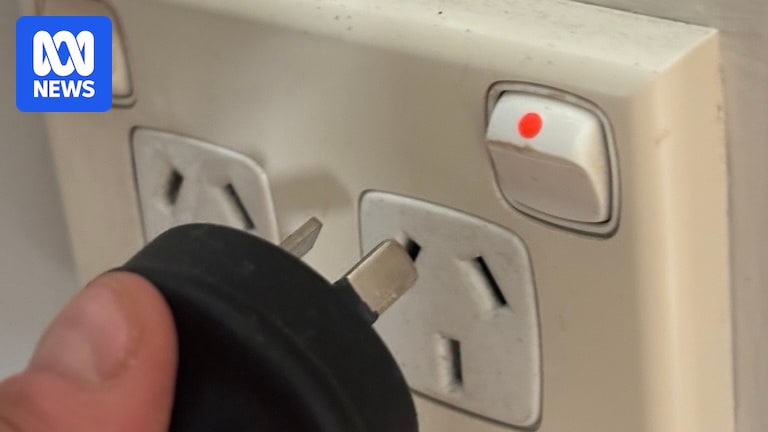
Tasmanian households with the state-owned electricity retailer will see an increase in their bills of just over $100 a year from July 1.
Economic Regulator Joe Dimasi, who sets the prices for Aurora Energy, has announced he will allow an average price increase of 4.23 per cent.
For a household on the flat residential rate (tariff 31/41), it equates to an increase of $108 per year, taking their yearly bill to $2,430.
The typical customer on the time-of-use rate (tariff 93) is estimated to see an increase of $113, reaching $2,444.
A typical business customer is expected to face an increase of $61 per year.
Higher costs being charged by TasNetworks accounted for almost all of the price increase, the regulator says. (Supplied: TasNetworks)
Mr Dimasi said higher network costs being charged by TasNetworks accounted for almost all of the price increase.
He said the wholesale price of power had increased only marginally and was offset by a reduction in renewable energy costs.
“The regulator has also approved Aurora Energy making changes to the structure of its tariffs,” Mr Dimasi said.
“These changes will generally increase the daily supply charge for most tariffs and reduce energy usage charges.“
He said this would mean the bill increase for customers would vary between customers.
Tasmanians have been told the average bills would still “remain the lowest or second lowest” in the national market. (Supplied: TasNetworks)
In 2024-25, Aurora Energy held around 92 per cent of the Tasmanian market.
Those with solar panels will receive a 5.6 per cent bump in their rate, though, with the feed-in tariff increasing to 9.276c/kWh.
This increase follows average rises of 2 per cent last year, and a 0.5 per cent price rise for 2024-25.
However, household and small businesses were slapped with a 9.5 per cent rise in 2023-24, and an 11.9 per cent increase in 2022-23.
Tasmanian prices among the lowest in nation, regulator says
Mr Dimasi said the 4.23 per cent increase in Tasmania was “marginally higher” than Victoria, and the default market offer in South-east Queensland, New South Wales, and South Australia.
In the upcoming year, the default market offer will decrease for all customers, except South Australian households, which will see just a 1.4 per cent increase.
The Victorian default offer, meanwhile, is decreasing by about 5 per cent.
Mr Dimasi also said following the upcoming increases, the average bills in Tasmania would still “remain the lowest or second lowest in the National Electricity Market”.
Joe Dimasi says the increase is “marginal”. (ABC News: Loretta Lohberger)
A price comparison included in the media release indicates that Victorian and South-east Queensland-based customers on the residential flat rate both pay between $100 to $200 dollars less than Tasmanian customers on the residential flat rate.
The Office of the Economic Regulator has been contacted for comment about these discrepancies.
Tasmanian households on the time-of-use rate are more than $1,000 better off than those on time-of-usage rates in those markets.
Small businesses in Tasmania using 10,000 kilowatt hours were estimated to pay less than those in all other states, whether they were on a flat rate or time-of-use rate.
Help available for those struggling with bills
Aurora Energy chief executive Nigel Clark acknowledged the increase, calling it “marginal”.
“As Tasmanians ourselves, we understand that financial challenges are already being felt by households and businesses and I want to assure the community that we have support options available to help customers doing it tough,” Mr Clark said.
He pointed to the Tasmanian government’s Energy Hardship Fund, which was doubled in size to $700,000 last week.
TasNetworks has been contacted for comment.
The network costs it charges are set by the Australian Economic Regulator.